




What's Happening?
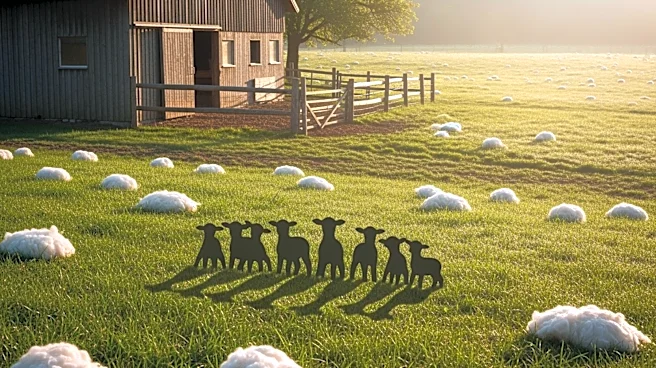
At Clover & Bee Farm in Underhill, Vermont, a sheep owned by Anne O’Connor gave birth to a rare set of sextuplets. This unexpected event occurred earlier this month, with all six lambs and their mother reported to be in good health. The farm, which is in its
fifth year of operation, raises sheep primarily for wool and also cultivates herbs and berries. The birth of sextuplets is an uncommon occurrence, with estimates of its rarity ranging from 1 in 1,000 to as rare as 1 in a million. The mother sheep, named Teemu after Finnish hockey player Teemu Selänne, had previously given birth to quadruplets. The farm plans to keep the four female lambs and find homes for the two males. This addition brings the farm's total flock size to 21, with five more ewes currently pregnant.
Why It's Important?
The birth of sextuplets at Clover & Bee Farm highlights the potential for significant growth in small-scale agricultural operations. Such rare events can enhance the genetic diversity and productivity of a flock, offering economic benefits to the farm. The increased flock size can lead to higher wool production, which is a primary product of the farm. Additionally, the event draws attention to the farm, potentially increasing interest and support from the local community and agricultural enthusiasts. This could lead to greater engagement with local agricultural networks and associations, fostering a supportive environment for small farms. The successful management of such a rare birth also demonstrates the farm's capability in animal husbandry, which could enhance its reputation and attract further opportunities for collaboration and growth.
What's Next?
Looking ahead, Clover & Bee Farm will focus on ensuring the health and growth of the new lambs, particularly during their early weeks. The farm will continue to monitor the lambs to ensure they receive adequate nutrition and care. As the farm prepares for its fifth summer, it will also manage the pregnancies of the other ewes, potentially leading to further expansion of the flock. The farm's plans to find homes for the male lambs will involve engaging with local farmers or agricultural networks. Additionally, the farm may explore opportunities to share their experience and insights with other small-scale farmers, contributing to the broader agricultural community.