
What's Happening?
Libyan authorities have issued a new alert regarding the Arctic Metagaz, a Russian LNG carrier wreck that remains a significant danger to navigation and the environment in the Mediterranean Sea. The vessel,
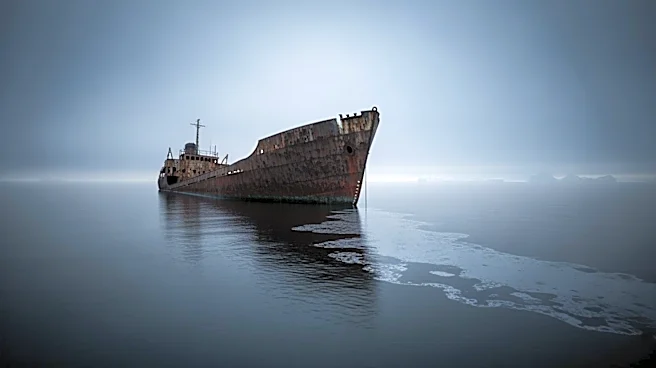
which was severely damaged by an explosion likely caused by a Ukrainian drone attack, has broken free from its towline due to adverse weather conditions. The wreck is currently adrift, approximately 120 nautical miles north of Benghazi, and poses a risk to nearby offshore oil and gas operations. Efforts to secure the wreck have been hampered by technical issues with the tugboats involved. The Libyan Ports and Maritime Transport Authority has called for more powerful tugs and international assistance to manage the situation. The wreck contains potentially explosive quantities of natural gas and nearly 1,000 tons of fuel, complicating salvage operations.
Why It's Important?
The drifting wreck of the Arctic Metagaz presents a significant environmental and navigational hazard in the Mediterranean Sea. The situation underscores the challenges of managing maritime incidents involving hazardous materials, particularly in politically sensitive regions. The potential for environmental damage is high, given the wreck's proximity to oil and gas operations and the presence of explosive materials. The incident also highlights the complexities of international maritime law and the responsibilities of flag states in addressing such hazards. The call for international cooperation, including invoking conventions like the Nairobi Wreck Removal Convention, reflects the need for coordinated efforts to mitigate the risks posed by the wreck.
What's Next?
Libya is working to bring in an international salvage team, potentially in partnership with Italy's Eni, to address the drifting wreck. The emergency committee overseeing the operation is urging expedited legal action against Russia, the flag state of the vessel, and is seeking assistance from the International Maritime Organization (IMO) to organize a salvage effort. The situation may prompt further diplomatic discussions and legal actions to determine responsibility and ensure the wreck is safely managed. The ongoing risk to navigation and the environment will likely keep this issue in focus for Mediterranean states and international maritime authorities.