







What's Happening?
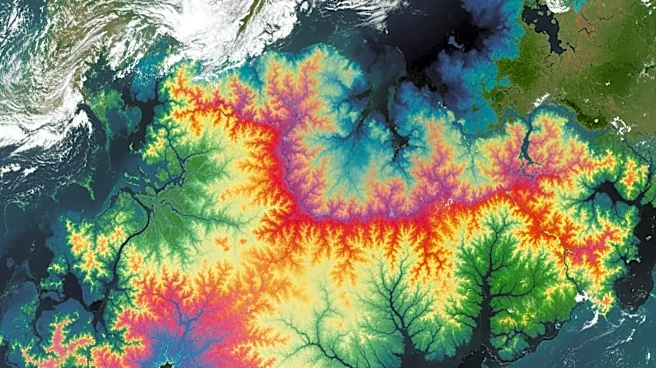
NASA's Landsat program, a joint effort with the U.S. Geological Survey, has been providing critical Earth monitoring data for over 50 years. The program's satellites have captured consistent and precise images of Earth's land surface, contributing to scientific
research and policy-making. In 2023, Landsat delivered an estimated $25.6 billion in value to the U.S. economy, aiding industries such as agriculture, forestry, and water management. The program's data is freely accessible, making it a vital resource for researchers and policymakers worldwide.
Why It's Important?
Landsat's comprehensive data archive is essential for understanding environmental changes and managing natural resources. The program supports flood mapping, wildfire restoration, and water management, saving millions annually in insurance premiums and operational costs. Its rigorous calibration process ensures data reliability, making Landsat the gold standard for satellite imagery. As climate change accelerates, the program's ability to provide long-term, large-scale data is invaluable for tracking environmental shifts and informing sustainable practices.
What's Next?
The future of Landsat depends on maintaining its data continuity and expanding its capabilities. Upcoming satellite launches will enhance the program's archive, providing more detailed and comprehensive monitoring. Continued collaboration with international partners and integration with other satellite missions will further improve global environmental assessments. As the program evolves, it will remain a cornerstone of Earth observation, supporting efforts to address climate change and resource management challenges.