



What's Happening?
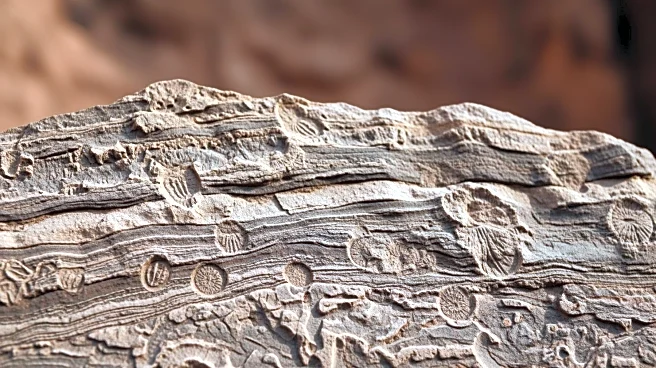
A team of scientists led by Giovanni Mussini from the University of Cambridge has uncovered a significant fossil site in the Grand Canyon, revealing well-preserved soft-bodied Cambrian organisms. The site, located along the Colorado River, contains over 1,500
small carbonaceous fossils, including a unique priapulid worm named Kraytdraco spectatus. This discovery, published in Science Advances, provides a rare glimpse into Cambrian life in an oxygen-rich environment, challenging the traditional view that such fossils are only preserved in low-oxygen settings. The fossils include crustaceans, mollusks, and other organisms, indicating a complex ecosystem with diverse feeding strategies.
Why It's Important?
This discovery is crucial for understanding early animal evolution and the dynamics of Cambrian ecosystems. The exceptional preservation of soft tissues in an oxygenated environment offers new insights into how these organisms lived and adapted. The findings challenge existing theories about fossil preservation and highlight the Grand Canyon as a significant site for paleontological research. This could lead to a reevaluation of other fossil sites and contribute to a deeper understanding of evolutionary processes. The research also underscores the importance of exploring overlooked areas for scientific discoveries.
Beyond the Headlines
The Grand Canyon's fossil site reveals the adaptability and complexity of early life forms, suggesting that evolutionary innovations occurred in diverse environments. The discovery of Kraytdraco spectatus, with its unique feeding apparatus, highlights the evolutionary experimentation that characterized the Cambrian period. This research may prompt further exploration of similar sites, potentially uncovering more about the evolutionary history of life on Earth. The study also emphasizes the role of rapid burial during storm events in preserving delicate structures, offering new perspectives on fossilization processes.