
What's Happening?
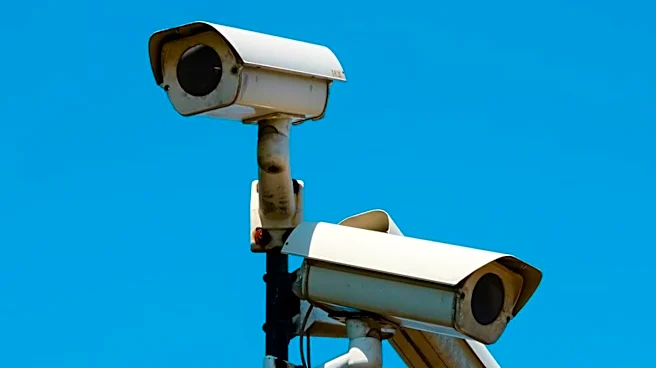
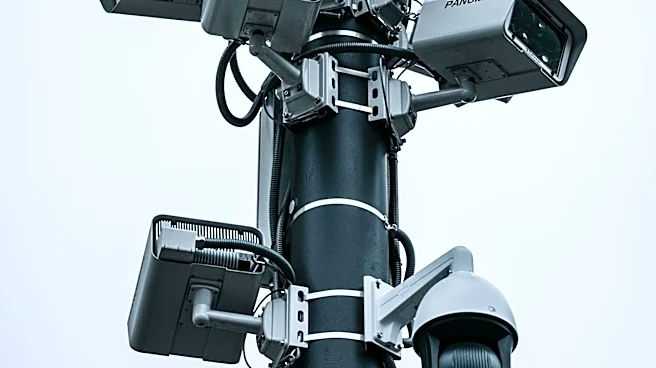
Bipartisan scrutiny is intensifying regarding the misuse of Flock Safety cameras, which are artificial intelligence-powered license plate readers. The technology, while touted by supporters as an invaluable
law enforcement tool, has drawn criticism following incidents such as a Kentucky police officer allegedly misusing the cameras to track his ex-girlfriend over 2,000 times. U.S. Sen. Rand Paul (R-Ky.) publicly stated that such surveillance occurred without a warrant or probable cause. Similarly, U.S. Sen. Bernie Sanders (I-Vt.) has called for an end to 'AI MASS SURVEILLANCE,' specifically naming Flock Safety. Former Department of Homeland Security official Juliette Kayyem noted that these systems collect extensive information unrelated to specific crimes, creating searchable databases for law enforcement. Michigan Democratic U.S. Senate candidate Abdul El-Sayed also highlighted the proliferation of this technology as a campaign issue. In response to these concerns, a Flock Safety spokesperson indicated the company supports legislation to establish guardrails for how license plate recognition data is used and shared. The company recently announced changes to its platform to address privacy concerns and document system abuses, though Sen. Josh Hawley (R-Mo.) has sent a letter citing a 'woeful lack of safeguards' and questioning the company's data handling practices.
Why It's Important?
The growing bipartisan concern over Flock Safety cameras highlights a critical tension between public safety and individual privacy rights in the U.S. The widespread deployment of AI-powered surveillance technology, capable of creating extensive searchable databases, raises significant questions about the scope of government surveillance and potential for abuse. The alleged misuse by a police officer underscores the vulnerability of personal data and the potential for these tools to be exploited for non-law enforcement purposes. The involvement of senators from both sides of the political spectrum, including Rand Paul and Bernie Sanders, indicates that this is not a partisan issue but a fundamental debate about civil liberties and the role of technology in society. The lack of clear regulations and oversight for such powerful surveillance tools could lead to a chilling effect on public freedom, as individuals may feel constantly monitored. The company's stated willingness to support legislation suggests an acknowledgment of these concerns, but the push for stronger safeguards from lawmakers like Sen. Hawley indicates that current measures are deemed insufficient to protect citizens from potential privacy infringements.
What's Next?
Flock Safety has stated it is making changes to its platform to address privacy concerns and document abuses, and supports legislation to create guardrails for data usage. However, Sen. Josh Hawley (R-Mo.) has initiated an investigation into the company, demanding documents by September 8, indicating that legislative and regulatory actions are likely to follow. The company has acknowledged receipt of Hawley's letter and expressed willingness to provide additional context on its technology. This suggests an ongoing dialogue between lawmakers and the company, potentially leading to new regulations or industry standards for AI-powered surveillance. The bipartisan nature of the concerns means that legislative efforts could gain significant traction. Future discussions will likely focus on establishing clear legal frameworks for data collection, storage, and access, as well as accountability mechanisms to prevent misuse. The outcome of these discussions could set precedents for how other AI surveillance technologies are regulated in the U.S., impacting both law enforcement capabilities and individual privacy rights.
Beyond the Headlines
The debate surrounding Flock Safety cameras extends beyond immediate privacy concerns to touch upon deeper ethical and societal implications of pervasive AI surveillance. The ability to create searchable databases of license plates, even without direct links to criminal activity, raises questions about the definition of 'probable cause' in the digital age and the potential for predictive policing based on aggregated data. This technology could disproportionately affect certain communities or individuals, leading to increased scrutiny and potential biases in law enforcement. The concept of 'AI MASS SURVEILLANCE' as articulated by Sen. Sanders points to a future where constant monitoring becomes the norm, potentially eroding the sense of anonymity and freedom in public spaces. The discussion also highlights the challenge of regulating rapidly evolving technology, where legal frameworks often lag behind technological advancements. The balance between leveraging technology for public safety and safeguarding fundamental rights will be a continuous ethical and legal challenge, requiring ongoing public discourse and legislative adaptation to prevent a surveillance state.