







What's Happening?
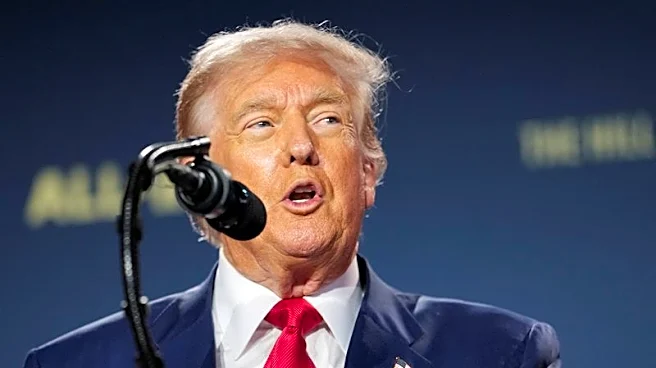
The Trump administration has imposed additional sanctions on Iran, targeting the country's newly created agency that controls shipping through the Strait of Hormuz. This move is part of a broader economic pressure campaign to push Iran into an agreement
to end the ongoing conflict. The sanctions come as energy prices rise due to Iran's effective closure of the strait, which is a critical passage for global oil and gas transportation. President Trump has stated that a deal is imminent, but negotiations continue.
Why It's Important?
The sanctions on Iran's maritime authority are a strategic effort to leverage economic pressure alongside military actions to resolve the conflict. The Strait of Hormuz is a vital chokepoint for global energy supplies, and its closure has led to significant economic repercussions. The situation also impacts U.S. domestic politics, as rising energy prices and the ongoing conflict have increased political pressure on the Trump administration ahead of the midterm elections. The outcome of these negotiations could influence future U.S. foreign policy and its approach to Middle Eastern affairs.
What's Next?
The U.S. and Iran are likely to continue negotiations, with both sides seeking to address unresolved issues. The international community will closely monitor the situation, particularly the impact on global oil markets and regional security dynamics. The U.S. may need to explore alternative diplomatic strategies to achieve a sustainable resolution. The outcome of these talks could have long-term implications for U.S.-Iran relations and broader Middle Eastern geopolitics.