



What's Happening?
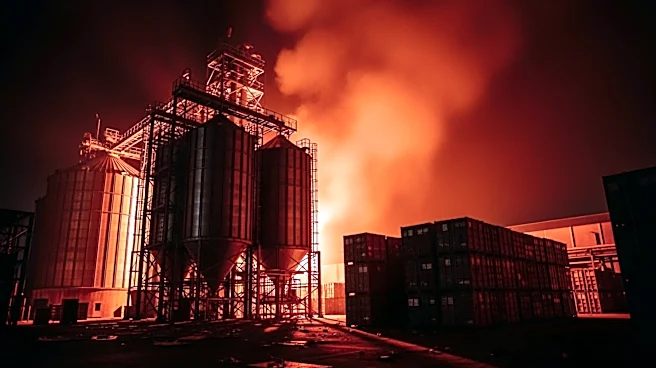
A deadly explosion occurred at a building in northeastern Myanmar, reportedly storing explosives for mining, resulting in over 45 fatalities. The incident took place in the village of Kaungtup, Namhkam township, near the Chinese border. The area is controlled
by the Ta’ang National Liberation Army (TNLA), an ethnic armed group. Rescue workers reported that 46 bodies, including six children, were recovered, and 74 injured individuals were transported to the hospital. The explosion damaged over 100 houses, and local authorities are providing relief and medical care. The TNLA stated that gelignite was stored for mining purposes, and an investigation is underway.
Why It's Important?
The explosion highlights the ongoing instability in Myanmar, where ethnic armed groups like the TNLA continue to engage in conflict with the central government. The incident underscores the risks associated with storing explosives and the potential for significant civilian casualties. It also reflects the broader turmoil in Myanmar following the military's seizure of power in 2021, which has led to widespread conflict and humanitarian challenges. The event may impact regional security and relations with neighboring countries, particularly China, given the proximity to the border.
What's Next?
An investigation into the cause of the explosion is underway, with the TNLA involved in the process. The incident may lead to increased scrutiny of explosive storage practices and safety measures in conflict zones. It could also affect ongoing peace negotiations and ceasefire agreements between ethnic armed groups and the Myanmar military. The international community may respond with calls for humanitarian aid and support for affected civilians, while regional powers like China may engage in diplomatic efforts to stabilize the area.
Beyond the Headlines
The explosion raises questions about the ethical and legal responsibilities of armed groups in conflict zones, particularly regarding civilian safety. It may prompt discussions on the regulation of explosive materials and the need for international oversight in areas controlled by non-state actors. The incident could also influence cultural perceptions of safety and security in Myanmar, affecting local communities' trust in armed groups and government authorities.