


What's Happening?
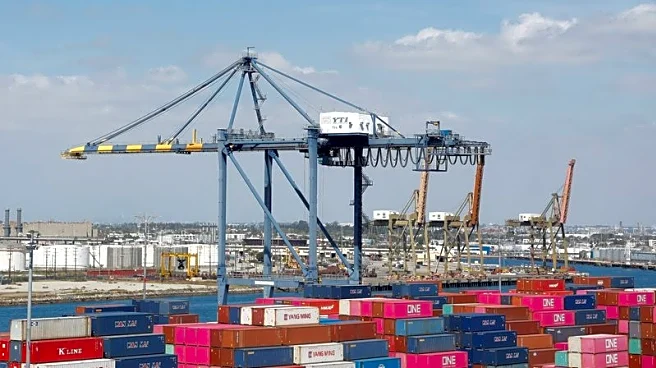
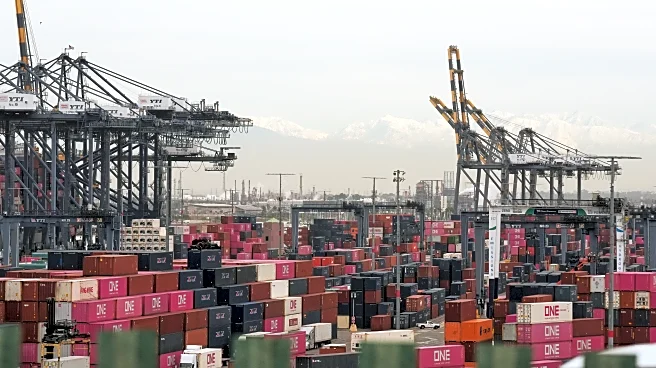
President Trump has announced a 60-day waiver of the Jones Act, a century-old maritime law, in response to rising gasoline prices due to the conflict with Iran. The Jones Act requires goods shipped between U.S. ports to be transported on U.S.-built and
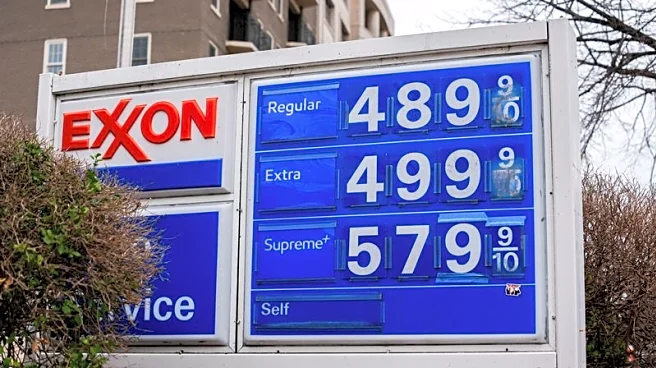
flagged vessels. The waiver allows foreign-flagged ships to transport goods, potentially reducing shipping costs and speeding up deliveries. The decision aims to mitigate disruptions in the oil market caused by Iran's blockade of the Strait of Hormuz, a critical oil supply route. The waiver is expected to provide some relief to gasoline prices, which have surged due to the conflict.
Why It's Important?
The waiver of the Jones Act is a strategic move to alleviate pressure on the U.S. energy market, which has been significantly impacted by the conflict in Iran. By allowing foreign vessels to transport goods, the administration hopes to stabilize fuel prices and ensure the flow of vital resources. However, the decision has sparked debate, with critics arguing that it undermines American maritime jobs and national security. The waiver's impact on gasoline prices is expected to be minimal, highlighting the complexity of addressing global supply chain disruptions through domestic policy changes.
What's Next?
The temporary waiver is set for 60 days, during which its effectiveness in reducing gasoline prices will be closely monitored. The administration may consider extending the waiver or implementing additional measures if the conflict in Iran continues to disrupt oil supplies. The decision could also prompt further discussions on the long-term relevance of the Jones Act, with some stakeholders advocating for its permanent repeal to enhance market efficiency. The outcome of this waiver could influence future policy decisions regarding U.S. maritime laws and their impact on domestic trade and energy markets.