
What's Happening?
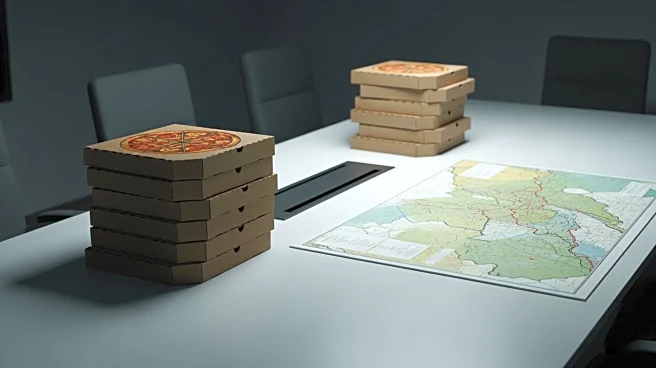
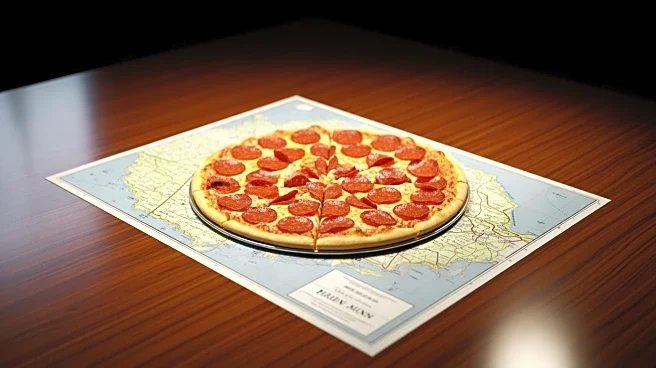
The Pentagon Pizza Index (PPI) is a humorous theory suggesting that spikes in pizza deliveries to US government buildings, particularly the Pentagon and the White House, correlate with imminent military operations. This theory dates back to the 1980s
and has been linked to various military actions, including the US invasions of Grenada and Panama. Despite its popularity among online intelligence enthusiasts, Pentagon officials dismiss the index as 'fake, but funny.' The PPI has gained attention for its supposed ability to predict military actions based on increased late-night pizza orders, although its reliability is questioned.
Why It's Important?
The PPI highlights the creative ways in which open-source intelligence enthusiasts attempt to predict government actions. While the index is not taken seriously by officials, it underscores the public's interest in understanding and anticipating military operations. The humorous nature of the PPI also reflects the broader trend of using unconventional methods to gather intelligence, which can sometimes lead to misinformation or false positives.
What's Next?
As the PPI continues to capture the imagination of online communities, it may inspire further exploration of unconventional intelligence-gathering methods. However, reliance on such indices carries risks, as they can lead to misinterpretations and false alarms. The Pentagon may consider addressing the public's curiosity by providing more transparency about military operations to reduce speculation.
Beyond the Headlines
The PPI serves as a reminder of the challenges in distinguishing between credible intelligence and humorous speculation. It also highlights the potential for misinformation to spread rapidly in the digital age, emphasizing the need for critical evaluation of sources and data. The index's popularity may prompt discussions about the role of humor in public discourse on serious topics like military actions.