



What's Happening?
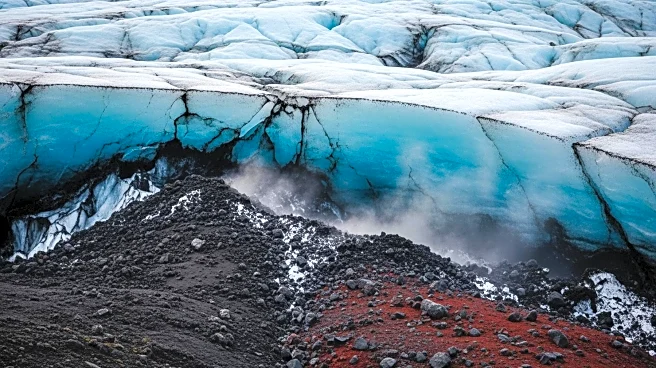
Scientists in Iceland are investigating whether the rapid melting of glaciers due to climate change could lead to more frequent and explosive volcanic eruptions. Iceland, known for its glaciers and volcanic activity, is experiencing significant ice loss,
which may reduce pressure on the Earth's crust and mantle, potentially increasing magma production. This phenomenon was observed after the last Ice Age, when volcanic activity surged as ice sheets retreated. Researchers are particularly focused on Bardarbunga, a volcano beneath Europe's largest glacier, Vatnajökull, which has shown signs of awakening.
Why It's Important?
The potential for increased volcanic activity due to melting glaciers poses significant risks to human populations and infrastructure, not only in Iceland but globally. Approximately 245 volcanoes worldwide are covered by ice, with millions living nearby. Increased eruptions could lead to natural disasters, affecting air travel, agriculture, and climate. Understanding these interactions is crucial for developing strategies to mitigate risks and adapt to changing environmental conditions. The research highlights the interconnectedness of climate change and geological processes, emphasizing the need for comprehensive climate action.
Beyond the Headlines
The study of glaciated volcanoes offers insights into the complex relationship between climate change and geological activity. As global temperatures rise, the melting of ice could lead to a feedback loop, where volcanic eruptions contribute to further warming. This underscores the urgency of addressing climate change to prevent cascading environmental impacts. The research also raises questions about the long-term stability of regions with ice-covered volcanoes, highlighting the need for international cooperation in monitoring and responding to potential threats.