


What's Happening?
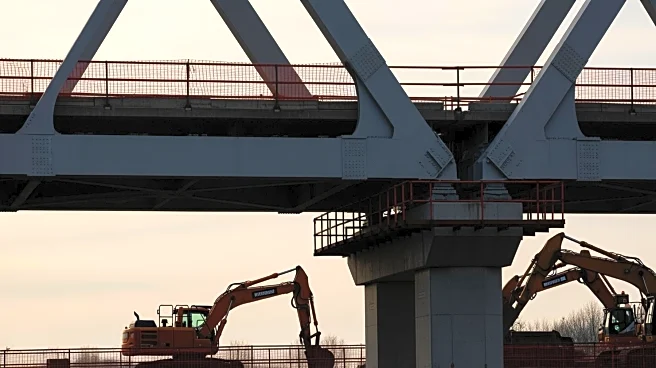
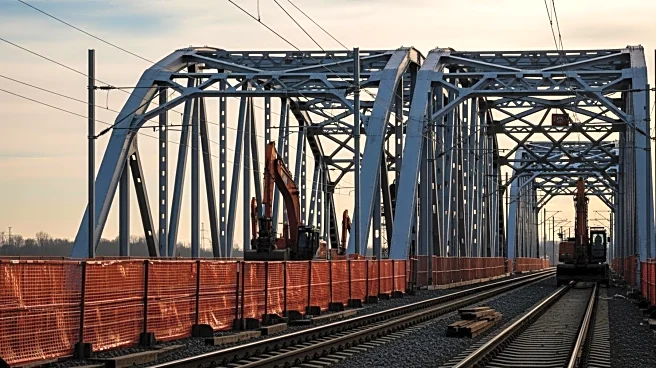
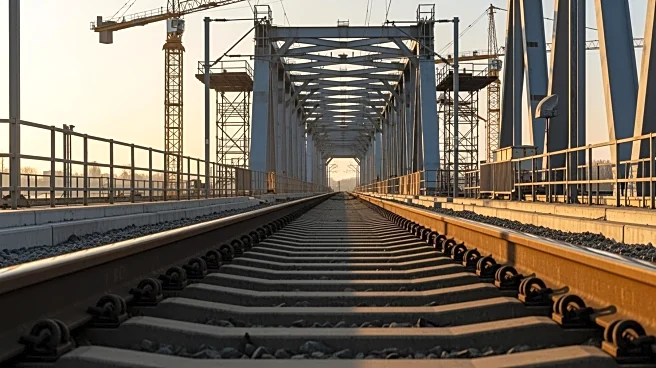
NJ Transit and Amtrak have announced that a significant construction project on the Portal Bridge, part of the Gateway Program, will cause delays and schedule changes for commuters until mid-March. The project, which began on February 16, 2026, involves
transforming the century-old Portal Bridge over the Hackensack River into the new Portal North Bridge. This construction will result in only one track being operational between Newark and Secaucus, leading to fewer trains running into New York Penn Station, earlier departure times, and longer travel durations. NJ Transit and Amtrak are advising commuters to avoid peak travel hours and consider remote work options. To mitigate the impact, NJ Transit is offering cross-honoring with PATH and New York Waterway Ferry services, as well as a discounted FLEXPASS ticket option.
Why It's Important?
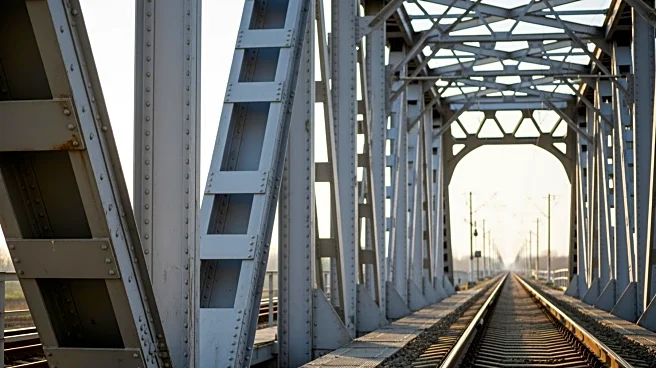
The construction of the new Portal North Bridge is a critical infrastructure project aimed at improving the reliability and capacity of the rail network in the Northeast Corridor, which is vital for daily commuters and the regional economy. The existing Portal Bridge, built in 1910, has been a source of frequent delays due to its age and mechanical issues. By replacing it with a higher bridge that does not need to open for river traffic, the project seeks to eliminate a major bottleneck. However, the temporary disruptions caused by the construction could affect thousands of commuters, potentially leading to increased traffic congestion and economic impacts for businesses relying on timely transportation.
What's Next?
As the construction progresses, NJ Transit and Amtrak will continue to monitor and adjust schedules to minimize disruptions. Commuters can expect ongoing updates and advisories regarding travel adjustments. The completion of the Portal North Bridge is anticipated to significantly enhance rail service efficiency and reliability in the long term. Stakeholders, including local businesses and government agencies, will likely assess the project's impact on regional transportation and economic activity, potentially influencing future infrastructure investments and policy decisions.