


What's Happening?
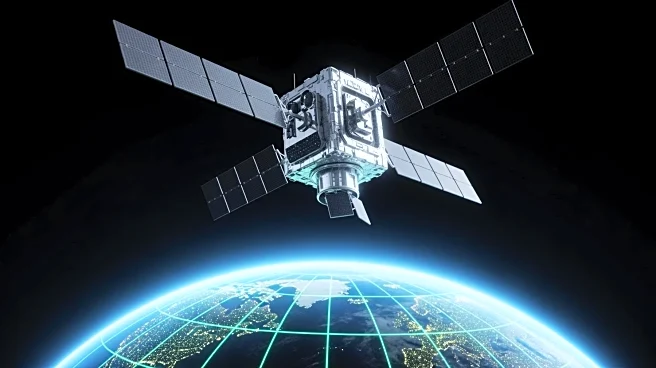
NASA has selected the Earth Dynamics Geodetic Explorer (EDGE) satellite mission as part of its Earth System Explorers Program. The mission, led by the University of California, San Diego, includes Woods Hole Oceanographic Institution's Catherine Walker,
who will contribute her expertise in glacier and ice shelf dynamics. EDGE aims to enhance the understanding of Earth's changing land, ice, and coastal systems through advanced LIDAR technology. The mission will provide high-resolution, three-dimensional observations of Earth's surface, aiding in environmental change forecasting and disaster preparedness. The project is slated for launch no earlier than 2030, pending a review in 2027.
Why It's Important?
The EDGE mission represents a significant advancement in Earth observation capabilities. By providing detailed, three-dimensional data on Earth's surface, the mission will improve the ability to monitor environmental changes and support disaster response efforts. This data will be crucial for water-resource planning, Arctic shipping safety, and infrastructure risk management in permafrost regions. The mission's outcomes will benefit scientists, policymakers, and planners by offering actionable intelligence to address environmental challenges and enhance national security.
What's Next?
The EDGE mission will undergo a confirmation review in 2027 to assess its progress and funding availability. If successful, the mission will proceed to launch, marking a new era in satellite-based Earth observation. The data collected will support a wide range of applications, from environmental monitoring to resource management, influencing future research and policy decisions. The mission's success could pave the way for further advancements in satellite technology and Earth science.