





What's Happening?
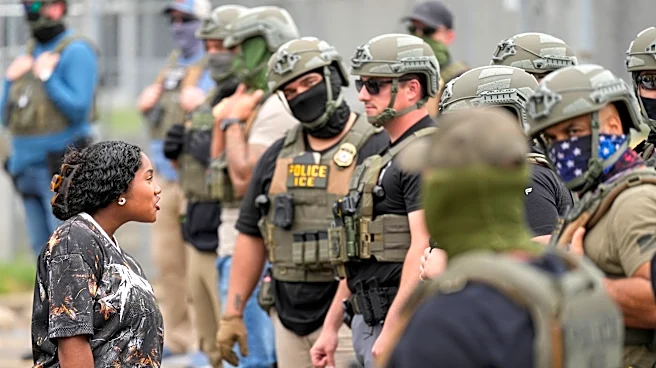
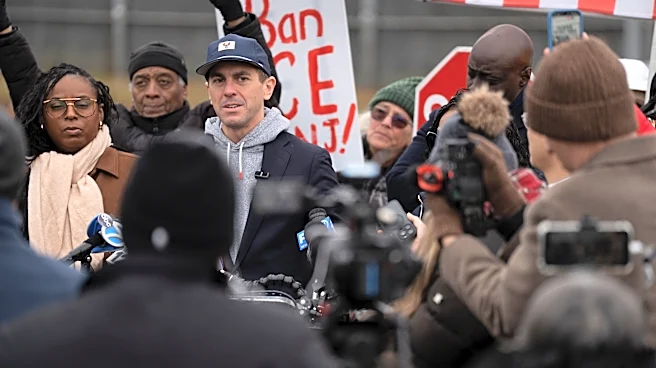
Tensions continue to rise outside an Immigration and Customs Enforcement (ICE) detention facility in Newark, New Jersey, as activists and Democratic leaders clash with the federal government over conditions there. A hunger strike inside the 1,000-bed
Delaney Hall detention center has been ongoing since Friday after detainees alleged they are not being well fed or provided sanitary living conditions. Protesters have clashed with ICE agents, who have used pepper spray and batons against them. The Department of Homeland Security has denied the allegations of a hunger strike and inhumane conditions, claiming only a handful of detainees are refusing meals.
Why It's Important?
The protests and hunger strike at Delaney Hall underscore the contentious nature of U.S. immigration policies and the treatment of detainees. The involvement of political figures like Governor Mikie Sherrill and Senator Andy Kim highlights the political dimensions of the issue, which could influence public opinion and policy decisions. The situation raises questions about the balance between immigration enforcement and humanitarian concerns, potentially impacting future legislative and administrative actions.
What's Next?
As protests continue, there may be increased pressure on federal and local authorities to address the detainees' grievances. The involvement of political leaders could lead to further scrutiny and potential policy reviews. The situation may prompt additional demonstrations and public discourse on immigration policies. The response from DHS and ICE will be critical in determining the next steps, as they navigate the legal and ethical implications of the protests and the detainees' claims.