





What's Happening?
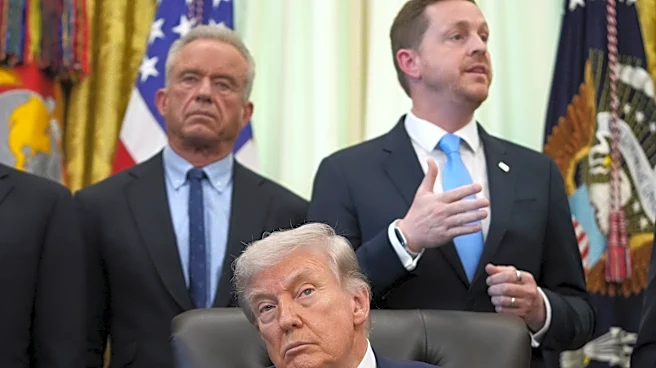
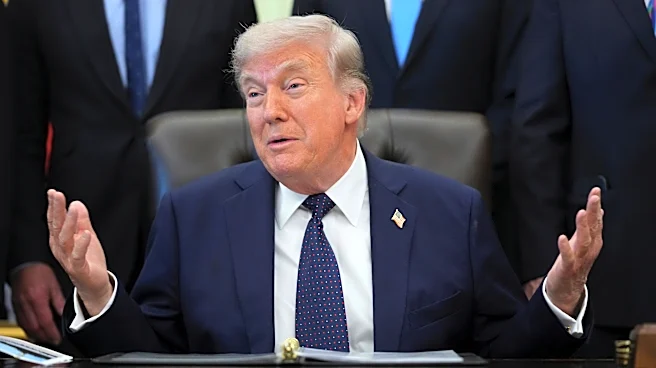
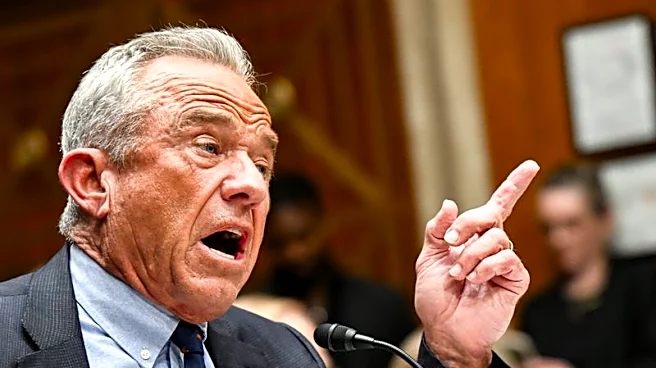
Health and Human Services Secretary Robert F. Kennedy Jr. defended President Trump's controversial claims regarding prescription drug price reductions. During an Oval Office meeting, Kennedy attempted to rationalize Trump's assertion that drug prices
could be reduced by percentages such as 1,000%, 600%, and 1,500%, which critics have pointed out are mathematically impossible. Kennedy's explanation involved a flawed interpretation of percentage calculations, suggesting that a price drop from $600 to $100 could be seen as a 600% savings, which is incorrect. This defense comes as the Trump administration promotes its efforts to lower drug prices, including a deal with biotech company Regeneron and the launch of the TrumpRx website, aimed at offering lower-cost drugs.
Why It's Important?
The defense of President Trump's drug price claims by RFK Jr. highlights ongoing debates over healthcare affordability and the administration's strategies to address rising prescription costs. The mathematical inaccuracies in the claims could undermine public trust in the administration's healthcare policies. The focus on drug pricing is significant as it affects millions of Americans who rely on affordable medications. The administration's efforts, such as the TrumpRx website, are under scrutiny for their effectiveness and the availability of cheaper alternatives. This situation underscores the challenges in implementing effective healthcare reforms and the political implications of misrepresenting policy outcomes.
What's Next?
The administration is likely to continue promoting its healthcare initiatives, despite criticism. Stakeholders, including lawmakers and consumer advocacy groups, may push for more transparency and accuracy in policy communications. The scrutiny of the TrumpRx platform and its limited offerings could lead to calls for improvements or alternative solutions. As the administration seeks to demonstrate progress in reducing drug prices, further negotiations with pharmaceutical companies and policy adjustments may be anticipated. The public and political response to these developments will be crucial in shaping future healthcare policies.