
What's Happening?
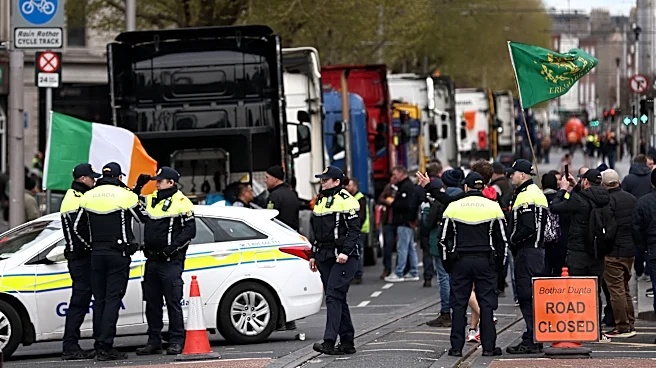
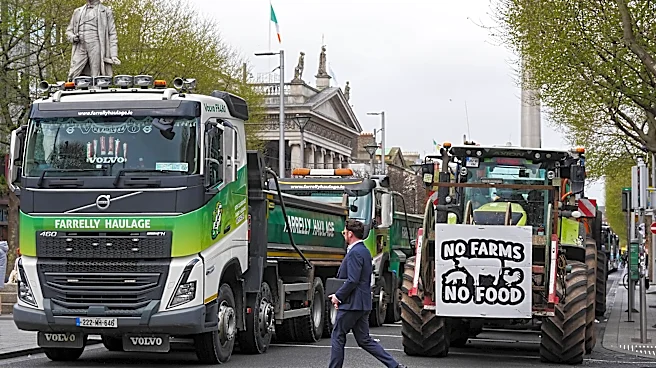
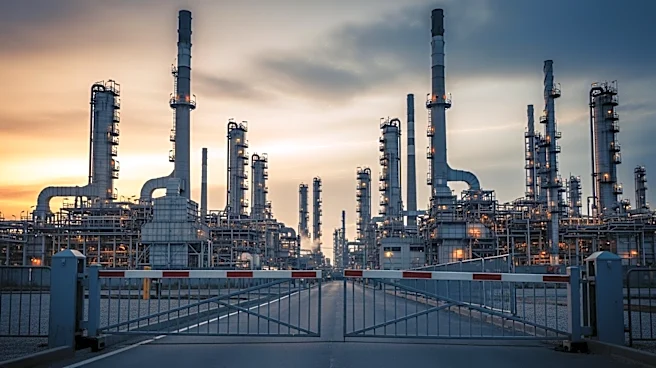
In Ireland, authorities have used force to clear a blockade at the country's only oil refinery, Whitegate, in County Cork. The blockade, led by protesters including truckers, farmers, and transport operators,
was in response to soaring petrol and diesel prices linked to conflict in the Middle East. The protests, which began on Tuesday, have resulted in fuel shortages affecting emergency services such as hospitals, ambulance services, and fire services. Police, supported by armed forces, used pepper spray and made arrests to disperse the protesters and restore fuel supplies. The protests have also disrupted bus services nationwide and tram services in Dublin. Prime Minister Micheal Martin has warned that the protests could force the country to turn away fuel shipments amid a global shortage.
Why It's Important?
The fuel protests in Ireland highlight the broader impact of geopolitical tensions on national infrastructure and emergency services. The disruption of fuel supplies poses a significant threat to public safety and the functioning of essential services. The government's inability to offset rising oil prices through tax cuts and rebates underscores the challenges faced by countries in managing economic fallout from international conflicts. The situation in Ireland serves as a cautionary tale for other nations grappling with similar issues, emphasizing the need for effective crisis management strategies and international cooperation to stabilize fuel markets.
What's Next?
Irish authorities plan to continue operations to clear blockades and ensure fuel distribution. The government may need to explore additional measures to address the root causes of the protests, such as negotiating with protest leaders or implementing further economic relief. The ongoing situation could prompt discussions on energy policy and the need for diversification of energy sources to reduce dependency on volatile international markets. Stakeholders, including political leaders and industry representatives, will likely engage in dialogue to prevent future disruptions and ensure the stability of critical infrastructure.