



What's Happening?
NASA is preparing for the Artemis II mission, scheduled for April 1, which will take astronauts beyond low-Earth orbit, exposing them to higher levels of space radiation. Unlike the International Space Station, which is protected by Earth's magnetic field,
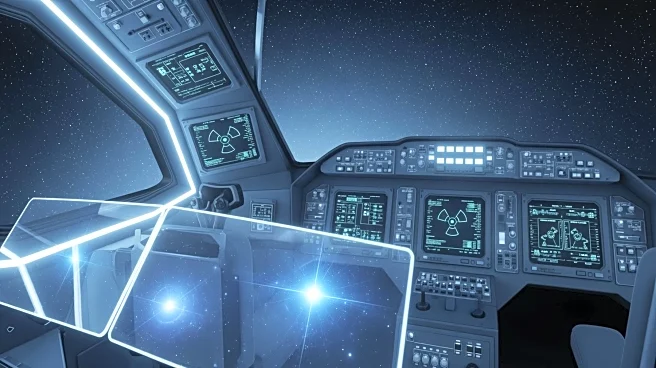
the Orion spacecraft will travel into deep space, increasing the risk of radiation exposure from solar events. NASA has implemented several safety measures, including advanced radiation sensors and personal dosimeters for astronauts. In case of a radiation spike, astronauts can move to a designated safe zone within the spacecraft. NASA and its partners are also using observatories to monitor solar activity in real-time.
Why It's Important?
The Artemis II mission is a critical step in NASA's efforts to return humans to the Moon and eventually explore Mars. Understanding and mitigating radiation risks are essential for the safety of astronauts on long-duration space missions. The success of Artemis II will provide valuable insights into protecting human health in space, paving the way for future deep space exploration. This mission also underscores the importance of international collaboration in space exploration, as NASA works with partners to monitor and respond to space weather threats.
What's Next?
As NASA continues to prepare for the Artemis II launch, the focus will remain on ensuring astronaut safety through rigorous testing and monitoring. The mission's outcomes will inform future strategies for deep space travel, including potential missions to Mars. NASA will continue to refine its radiation protection measures and collaborate with international partners to enhance space weather monitoring capabilities.