







What's Happening?
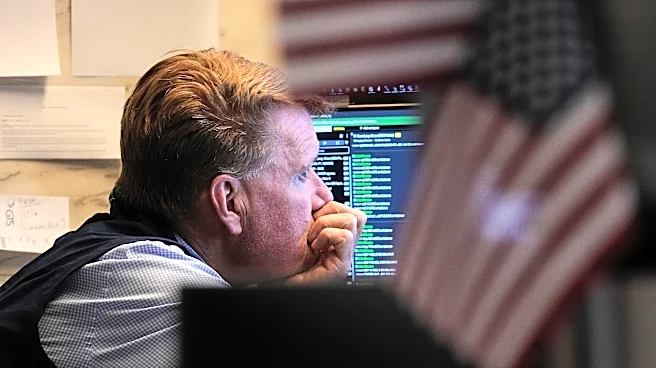
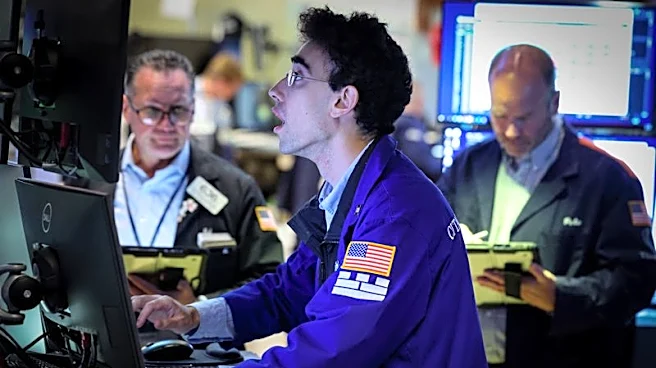
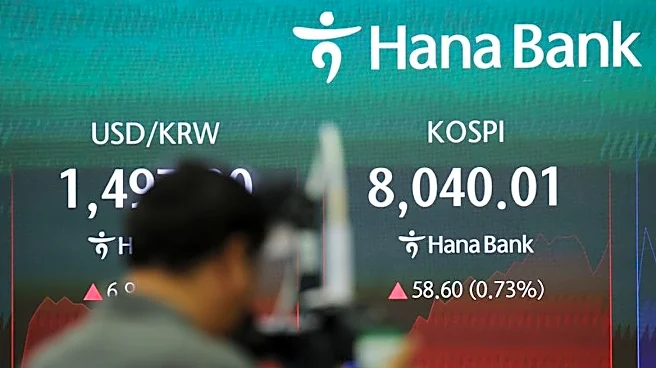
South Korea's Kospi stock market index has experienced significant volatility at the start of the week, with an 8% drop on Monday followed by an 8.2% recovery on Tuesday. This fluctuation is largely attributed to a sell-off in the U.S. market, particularly
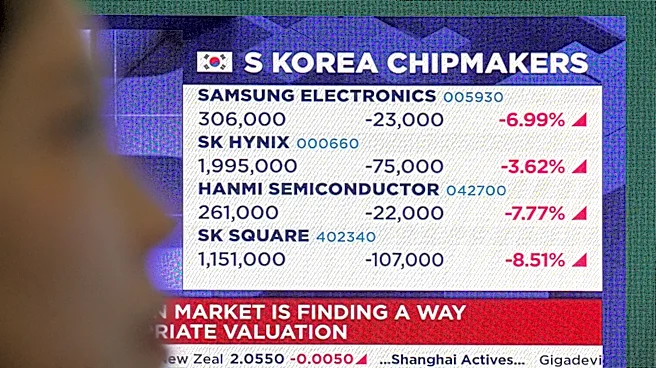
affecting tech stocks, which impacted the Kospi due to its heavy reliance on tech giants like Samsung and SK Hynix. These companies, which have recently surpassed market capitalizations of $1 trillion, are integral to the Kospi's performance. The U.S. Nasdaq index's nearly 5% drop last Friday, driven by profit-taking in the semiconductor sector, had a delayed impact on the South Korean market, which was closed at the time. The Kospi's recent performance reflects its transformation from a lesser-known market to a significant player, driven by global AI trends and domestic market reforms.
Why It's Important?
The volatility in the Kospi index underscores the interconnectedness of global markets, particularly between the U.S. and South Korea. The heavy influence of U.S. tech stock movements on the Kospi highlights the vulnerability of South Korean tech giants to international market trends. This situation is significant for investors and policymakers as it demonstrates the potential risks and rewards of globalization in financial markets. The Kospi's recent fluctuations also reflect broader economic trends, such as the global AI rally and market reforms, which have made South Korea a more attractive investment destination. The performance of the Kospi can have implications for international investors and economic stakeholders, influencing investment strategies and economic policies.
What's Next?
Looking ahead, the Kospi's performance will likely continue to be influenced by U.S. market trends, particularly in the tech sector. Investors and analysts will be closely monitoring the movements of major U.S. tech stocks, as any significant changes could have a ripple effect on the South Korean market. Additionally, ongoing market reforms in South Korea may further impact the Kospi's attractiveness to international investors. Stakeholders will need to consider these factors when making investment decisions and formulating economic policies. The situation also calls for increased attention to the potential impacts of global market volatility on domestic economies.