



What's Happening?
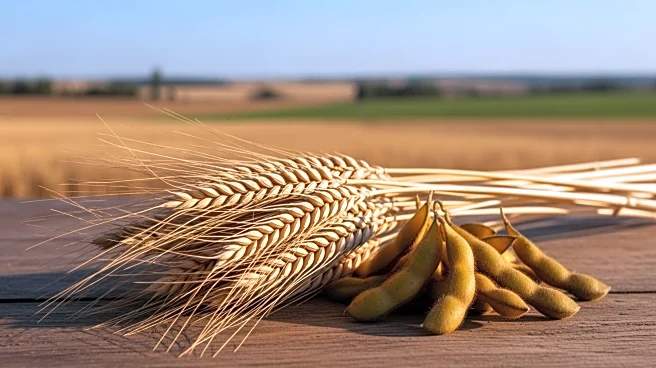
Chinese officials have announced plans to stabilize grain production and increase soybean oilseed self-sufficiency, as part of efforts to reduce reliance on imports and enhance food security. The Central Rural Work Conference emphasized the need for high-quality
agricultural development and improved self-sufficiency rates. This initiative is driven by China's goal to secure its food supply amid global trade tensions, particularly with the U.S., a major agricultural partner. The strategy includes investments in seed technology and machinery to boost domestic production.
Why It's Important?
China's push for self-sufficiency in grain and soybean oilseeds has significant implications for global agricultural markets, particularly for U.S. exporters. As China seeks to reduce its dependency on imports, U.S. farmers may face decreased demand for their products, potentially impacting prices and trade balances. This move also highlights China's strategic focus on food security and its efforts to mitigate risks associated with international trade tensions.
What's Next?
China's agricultural policy shift may lead to increased competition in global markets as the country invests in domestic production capabilities. U.S. agricultural stakeholders will need to monitor these developments closely and explore alternative markets to offset potential losses. Additionally, diplomatic efforts may be necessary to address trade tensions and maintain a stable agricultural trade relationship with China.