




What's Happening?
U.S. Transportation Secretary Sean Duffy announced a $5 billion investment into the nation's rail system during a visit to Cincinnati. Speaking at Union Terminal, Secretary Duffy declared a "golden age of rail" and outlined plans for the multi-billion-dollar
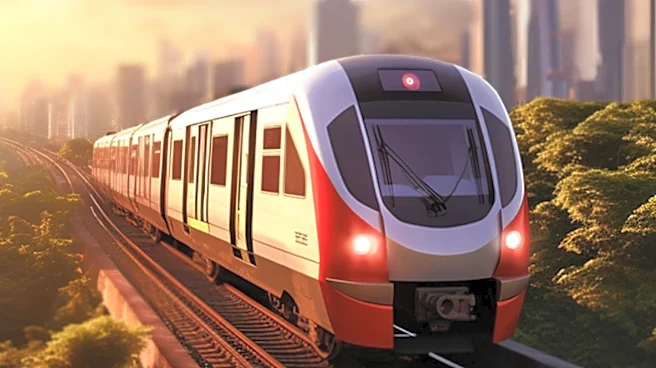
initiative, which will be implemented in three phases. The investment includes closing 30 grade crossings and upgrading an additional 1,000 across the U.S. to enhance safety. Furthermore, the plan involves purchasing 43 new trains to replace older Amtrak models and overhauling 41 existing trains that serve the Midwest and Pacific regions. Specifically for Cincinnati, a $40 million grant has been allocated to close two problematic highway crossings in Fairfield. Secretary Duffy stated that this significant investment is made possible by redirecting funds from the canceled high-speed train project in California, emphasizing a commitment by President Trump and himself to improving passenger rail in America.
Why It's Important?
This substantial investment in rail infrastructure signifies a strategic shift in federal transportation priorities, moving away from large-scale, high-cost projects like the California high-speed rail in favor of nationwide safety and modernization efforts. The focus on grade crossing improvements directly addresses a critical safety concern, potentially reducing accidents and fatalities in communities across the country. For Amtrak, the acquisition of new trains and the overhaul of existing ones could significantly improve service reliability, passenger comfort, and operational efficiency, potentially boosting ridership and the economic viability of passenger rail. The allocation of specific grants, such as the $40 million for Cincinnati, demonstrates a targeted approach to local infrastructure challenges, which can have immediate positive impacts on traffic flow and safety in affected areas. This initiative also reflects the Trump Administration's broader agenda of investing in traditional infrastructure and prioritizing projects with tangible, widespread benefits.
What's Next?
While the U.S. Transportation Secretary has announced the multi-billion-dollar rail investment, specific timelines for the commencement of these projects have not yet been provided. The Department of Transportation will likely proceed with detailed planning and procurement processes for the new Amtrak trains and the extensive grade crossing upgrades. Local communities and state transportation departments, particularly those in the Midwest and Pacific regions, will need to coordinate with federal agencies to facilitate the implementation of these improvements. The $40 million grant for Cincinnati's Fairfield highway crossings will require local planning and execution, with an expectation of timely and on-budget delivery, as praised by Secretary Duffy regarding Ohio's past performance. Future announcements are anticipated to detail the phased rollout of the projects and their expected completion dates, as the administration aims to demonstrate progress on its infrastructure commitments.
Beyond the Headlines
The decision to fund this national rail investment by canceling the California high-speed rail project highlights a broader ideological and fiscal debate within U.S. infrastructure policy. It underscores a preference for projects with immediate, widespread safety and modernization benefits over ambitious, long-term, and often costly high-speed rail initiatives. This approach could set a precedent for future federal infrastructure funding, potentially favoring upgrades to existing systems and addressing current deficiencies over pioneering new, transformative transportation technologies. The emphasis on "making passenger rail in America great again" also aligns with a nationalistic rhetoric, suggesting a focus on domestic manufacturing and job creation through infrastructure development. This could lead to increased scrutiny of other large-scale, potentially over-budget projects and a re-evaluation of their federal funding eligibility.