
What's Happening?
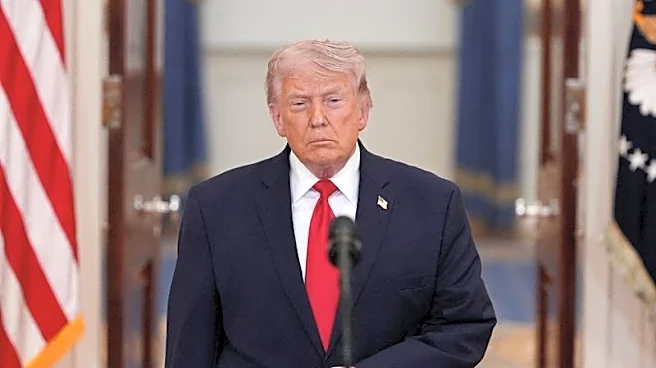
President Donald Trump has expressed strong disapproval of the Supreme Court's potential decision to uphold birthright citizenship in the United States. Speaking at the White House, Trump labeled the continuation
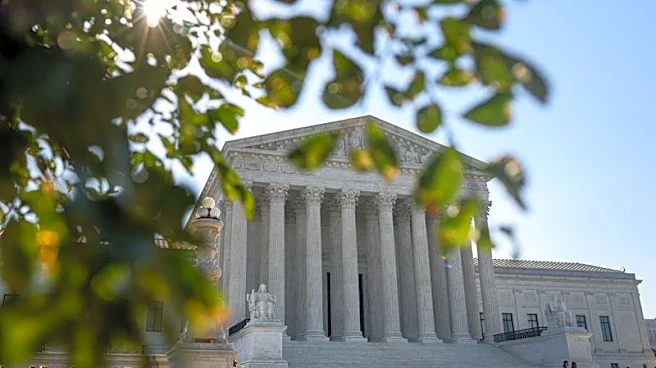
of birthright citizenship as a 'disgrace,' arguing that it encourages immigration and imposes unsustainable costs on the country. The Supreme Court is currently deliberating on a case concerning Trump's January 2025 executive order, which seeks to limit automatic citizenship for certain children born in the U.S. This order has faced multiple legal challenges and has been blocked from taking effect by lower courts. The case is significant as it could redefine the interpretation of the 14th Amendment's citizenship clause and test the limits of presidential authority in altering constitutional protections.
Why It's Important?
The Supreme Court's decision on this matter could have far-reaching implications for U.S. immigration policy and the scope of executive power. If the court sides with Trump, it could lead to a significant shift in how citizenship is granted, potentially affecting hundreds of thousands of children born in the U.S. each year. This decision could also set a precedent for future executive actions aimed at reinterpreting constitutional provisions. The outcome may influence public opinion and political discourse on immigration, a contentious issue in American politics. Additionally, the ruling could impact the legal framework governing presidential authority, potentially altering the balance of power between the executive branch and the judiciary.
What's Next?
The Supreme Court is expected to issue its ruling before the end of its term in late June or early July. The decision will likely prompt reactions from various stakeholders, including political leaders, immigration advocacy groups, and legal experts. If the court upholds Trump's order, it may lead to further legal challenges and legislative efforts to address the implications of the ruling. Conversely, if the court strikes down the order, it could reinforce the current interpretation of the 14th Amendment and limit the scope of executive power in altering constitutional rights.