





What's Happening?
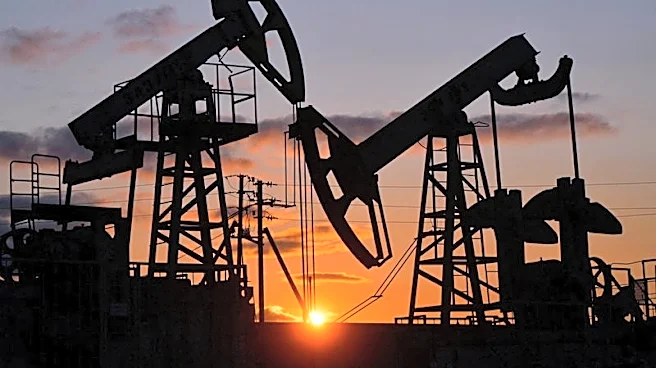
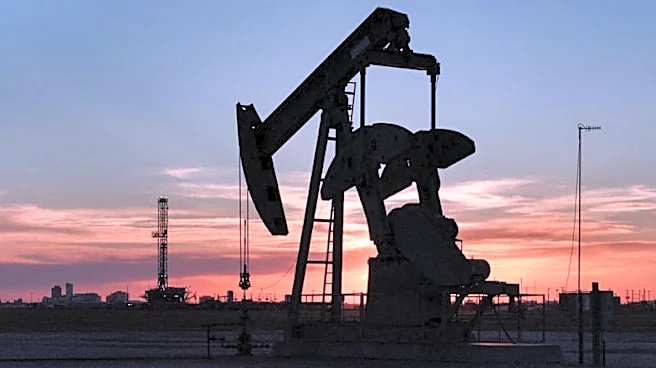
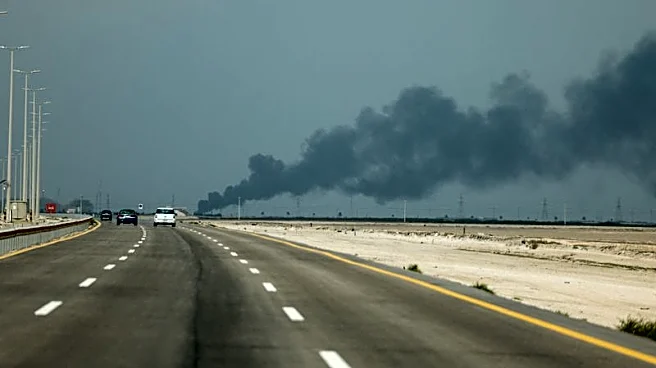
Saudi Arabia has reported significant disruptions in its oil and gas production following attacks on key energy infrastructure. Facilities across Riyadh, the Eastern Province, and Yanbu Industrial City were targeted, including a pumping station on the East-West
pipeline, which is crucial for transporting crude to the Red Sea and bypassing the Strait of Hormuz. The attacks have resulted in a reduction of over 600,000 barrels per day (bpd) in oil production capacity and decreased flows on the East-West pipeline by about 700,000 bpd. Prior to the disruption, the pipeline was transporting approximately 7 million bpd, with about 5 million bpd destined for export markets. The outages have added pressure to global oil balances, already strained by regional conflicts, and have led to a sharp rise in Brent crude prices.
Why It's Important?
The disruption in Saudi Arabia's oil production and export capacity has significant implications for global energy markets. As one of the world's largest oil producers, any reduction in Saudi output can lead to increased volatility in oil prices, affecting economies worldwide. The attacks highlight the vulnerability of energy infrastructure to regional instability, particularly in the Middle East, where geopolitical tensions can have far-reaching consequences. The loss of production capacity, equivalent to roughly 10% of Saudi Arabia's pre-conflict crude exports, underscores the critical role of the kingdom in maintaining global supply continuity. The situation may prompt countries reliant on Saudi oil to seek alternative sources or increase strategic reserves to mitigate potential shortages.
What's Next?
The timing and duration of the outages remain uncertain, with the extent of damage to facilities being a key factor in determining how quickly production and exports can be restored. Saudi Arabia may need to invest in strengthening its infrastructure to prevent future disruptions and ensure supply continuity. Global markets will continue to monitor the situation closely, with further constraints on Saudi output potentially adding to volatility. Countries dependent on Saudi oil may explore diversifying their energy sources or increasing diplomatic efforts to stabilize the region and secure supply chains.
Beyond the Headlines
The attacks on Saudi energy infrastructure could lead to long-term shifts in global energy strategies. Countries may accelerate their transition to renewable energy sources to reduce dependence on oil from geopolitically unstable regions. Additionally, the situation may prompt discussions on international cooperation to protect critical energy infrastructure from attacks. The incident also raises ethical questions about the impact of regional conflicts on civilian populations and the environment, as disruptions in oil production can lead to economic hardships and environmental degradation.