







What's Happening?
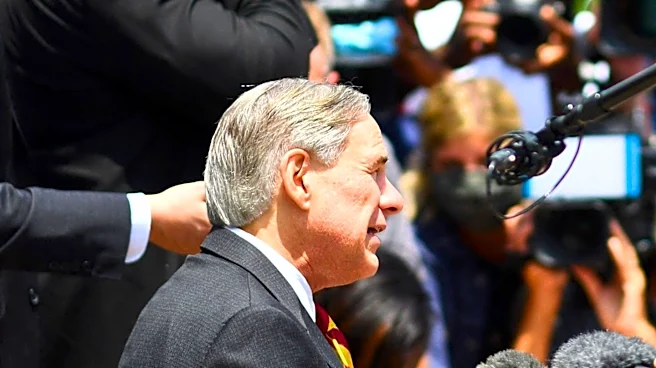
Texas Governor Greg Abbott has refused to extradite Christian Castro, an ICE agent, to Minnesota to face state charges related to a shooting incident in Minneapolis. Castro, who allegedly fired a shot into a home, wounding a fleeing man, was charged by
Hennepin County officials. After the incident, Castro was ordered by ICE to return to his usual posting in the Rio Grande Valley, Texas. Despite an initial arrest by Texas Rangers and federal agents, Castro was released from a Texas jail after a federal judge declined to force his extradition, citing that Minnesota had sued too early as Governor Abbott had not yet formally rejected the request. This refusal has led to a legal dispute between Minnesota and Texas, raising questions about interstate cooperation and the extradition process.
Why It's Important?
This dispute highlights a significant challenge to the principle of horizontal federalism, which relies on good-faith cooperation between states. Governor Abbott's refusal to extradite Castro, despite the constitutional mandate for states to honor such requests, sets a potentially problematic precedent. It suggests that political views or whims of a governor could impede the legal process across state lines, potentially allowing individuals accused of crimes to evade justice by fleeing to states with sympathetic leadership. This situation could lead to an 'arms race' between states over extradition, where political alignment rather than legal obligation dictates cooperation, thereby weakening the bonds that hold the United States together as a unified entity.
What's Next?
Hennepin County Attorney Mary Moriarty has expressed concerns about the implications of Castro's release, stating that he is free to go wherever he wants. While a spokesperson for DHS confirmed Castro remains suspended without pay, the lack of federal charges and the expiration of his 90-day detention period in Texas leave his legal future uncertain. The ongoing 'investigation' by Governor Abbott's office into whether Castro is legally a 'fugitive' is seen by some legal experts as a delaying tactic. The case could continue to escalate legally, potentially leading to further federal court challenges or a re-evaluation of interstate extradition protocols, especially if other states begin to follow Texas's precedent in similar politically charged cases.
Beyond the Headlines
The conflict between Texas and Minnesota over the extradition of Christian Castro delves into the complex interplay of state sovereignty, federal authority, and political ideology. This case is not merely a legal battle but a reflection of deeper political divisions, where the mechanisms of justice can become entangled with partisan interests. The precedent set here could have far-reaching implications for how states interact, particularly in an increasingly polarized political landscape. It raises ethical questions about accountability for federal agents accused of crimes and the extent to which states can assert their jurisdiction. The situation underscores how fundamental constitutional principles, like the extradition clause, can be tested and strained by contemporary political dynamics, potentially eroding trust and cooperation among states.