






What's Happening?
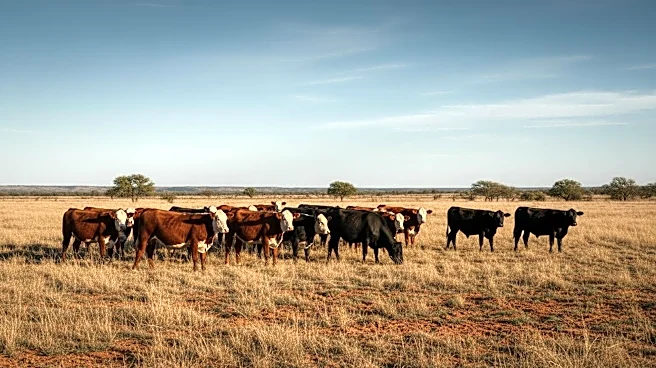
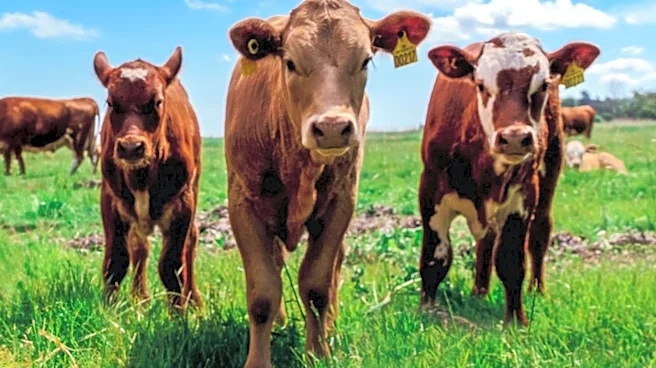
The New World screwworm, a flesh-eating parasite, is spreading through Texas, posing a significant threat to the U.S. cattle industry. The parasite's larvae feed on the wounds of warm-blooded animals, and its presence in the U.S. marks the first detection
in livestock in about five decades. The U.S. Department of Agriculture (USDA) is under scrutiny, particularly from Democrats, for its perceived inability to effectively respond to the threat due to staff cuts and reorganization plans. The USDA, in collaboration with the Department of Homeland Security, is implementing measures such as quarantines and wildlife surveillance to contain the spread. The origin of the screwworm in the U.S. remains unclear, with speculation about its spread through infected livestock or wild animals.
Why It's Important?
The spread of the screwworm poses a severe risk to the U.S. cattle industry, which is a crucial component of the national economy. The parasite's presence could lead to significant economic losses for cattle farmers and related industries. The USDA's response to the threat is critical, as failure to contain the screwworm could result in widespread livestock infections, affecting meat production and prices. The situation also highlights the importance of effective border control and surveillance to prevent the introduction of foreign pests and diseases. The political implications are significant, as the USDA's handling of the situation is being scrutinized, potentially impacting public trust in government agencies.
What's Next?
Efforts to contain the screwworm will continue, with the USDA and other agencies working to monitor and control its spread. The use of drones and artificial intelligence for wildlife surveillance is being explored. Additionally, a new facility in Mexico has been established to produce sterile flies to curb the screwworm's reproductive cycle. The situation may prompt further political debate over immigration policies and border security, as well as discussions on the USDA's resource allocation and organizational structure.