






What's Happening?
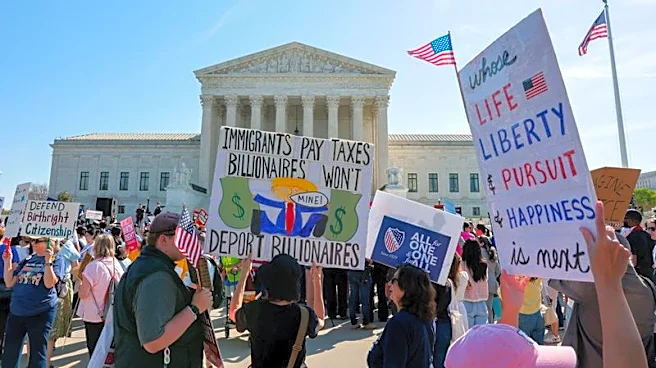
President Trump’s initiative to end automatic birthright citizenship in the United States has reached the Supreme Court, where it faced rigorous questioning from the justices. The proposal aims to alter the current interpretation of the 14th Amendment,
which grants citizenship to all individuals born on U.S. soil. During the court session, justices expressed skepticism about the legal arguments supporting the change, highlighting the complexity and potential constitutional challenges involved. This development is part of a broader global trend where some countries are tightening citizenship pathways, while others, like Canada, are expanding them. The Supreme Court's decision on this matter could have significant implications for immigration policy and the status of millions of individuals born in the U.S.
Why It's Important?
The outcome of this Supreme Court case could redefine the concept of citizenship in the United States, affecting millions of people born in the country to non-citizen parents. If the court sides with President Trump’s proposal, it could lead to a significant shift in immigration policy, potentially increasing the number of individuals without citizenship status. This change could impact social services, education, and employment opportunities for those affected. Additionally, the case highlights the ongoing debate over immigration reform in the U.S., a contentious issue that influences political discourse and policy-making. The decision could also set a precedent for other countries considering similar changes to their citizenship laws.
What's Next?
The Supreme Court is expected to deliberate on the arguments presented and issue a ruling that will clarify the legal standing of birthright citizenship in the U.S. Depending on the outcome, there could be legislative responses from Congress, either to uphold the current interpretation of the 14th Amendment or to support the proposed changes. Advocacy groups and civil rights organizations are likely to intensify their efforts, either to defend the existing citizenship rights or to push for reforms. The decision will also be closely watched by international observers, as it may influence global immigration policies and citizenship laws.