
What's Happening?
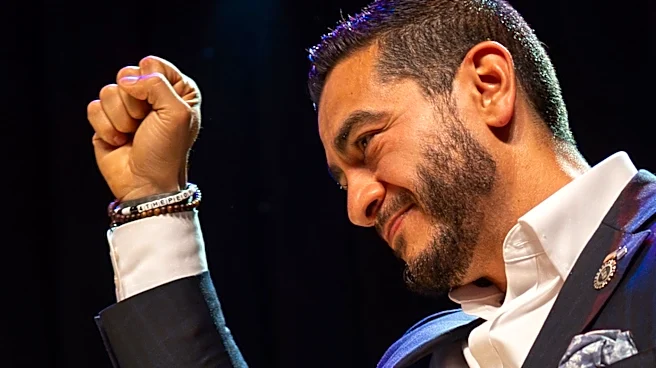
Former Rep. Mike Rogers, the Republican nominee for Senate, has attributed a controversial 2019 comment made by Hasan Piker, suggesting the U.S. deserved the 9/11 terrorist attacks, to Democratic nominee Abdul El-Sayed. Piker, a far-left streamer, had
walked back his remark within days, claiming it was a faulty attempt to emphasize the consequences of U.S. foreign policy choices. El-Sayed has appeared on the campaign trail with Piker, leading to concerns among Democratic strategists as Republicans link the two progressives. Former Democratic primary opponent Haley Stevens has called on El-Sayed to cut ties with Piker. El-Sayed dismissed Piker's remark as a 'dumb statement' but did not disavow it when questioned on national television, stating he wants to be held accountable for his own words and actions, not for 'gotcha politics' regarding someone else's past comments.
Why It's Important?
El-Sayed's refusal to distance himself from Piker's controversial remarks and other unpopular beliefs expressed by his allies could significantly harm his ability to win the general election against Rogers. Polls indicate that Rogers has been leading El-Sayed, with some reflecting concerns about the Democrat's electability in the battleground state. A Fox News poll revealed that 54% of registered voters are concerned El-Sayed's ideas are too radical, with 33% being 'extremely' worried. Republican pollster Daron Shaw noted that El-Sayed's nomination path highlighted party rifts, emphasizing the need for him to reassure a broad spectrum of Michigan Democrats, including Reagan Democrats, Jewish voters, and Black voters, that he will serve their interests rather than pursue an extremist agenda. This situation could allow Rogers to secure a wider victory in the general election, despite El-Sayed's narrow primary win.
What's Next?
The upcoming general election will test El-Sayed's ability to overcome the negative associations stemming from Piker's comments and his perceived radical positions. His campaign will likely need to address voter concerns about his ideology and affiliations to broaden his appeal beyond his progressive base. Rogers is expected to continue highlighting these connections to undermine El-Sayed's electability. The outcome will depend on whether El-Sayed can effectively reassure moderate voters and unify the Democratic party, or if the Republican strategy of linking him to controversial figures and ideas will prove successful in swaying undecided voters in the battleground state.
Beyond the Headlines
This situation underscores the challenges faced by progressive candidates in balancing their base's expectations with the need to appeal to a wider electorate in general elections. The 'cancel culture' debate, as referenced by El-Sayed, highlights the ongoing tension between accountability for past statements and the potential for political opponents to exploit such remarks. The incident also reflects the increasing scrutiny of political figures' associations and the impact of social media commentary on traditional political campaigns. The long-term implications could include a shift in how candidates manage their public image and affiliations, particularly in an era where past statements and associations can be easily resurfaced and weaponized in political discourse.