






What's Happening?
Four locally acquired cases of chikungunya virus infection have been confirmed in the canton of Ticino, Switzerland, near Bellinzona. This marks the first instance of mosquito-mediated transmission of the virus within Switzerland. The four patients reside
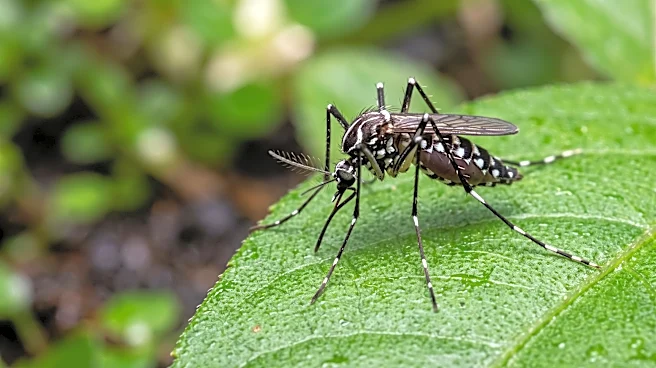
in the same neighborhood and are currently recovering, though they are experiencing persistent joint pain. The chikungunya virus is transmitted primarily through the bites of tiger mosquitoes (Aedes albopictus), a species that has established populations across parts of Switzerland since the early 2000s. These autochthonous cases suggest that a mosquito in Ticino bit an individual who had previously been infected in a high-risk area and then returned to Switzerland. The mosquito subsequently picked up the virus and transmitted it to others through further bites. Symptoms of chikungunya include high fever, severe joint and muscle pain, and headaches, with joint pain potentially lasting for months. While generally not dangerous, severe symptoms can occur in newborns, older adults, and those with chronic illnesses.
Why It's Important?
The confirmation of local chikungunya transmission in Switzerland is significant as it indicates the increasing geographical spread of mosquito-borne diseases, even into temperate regions. The establishment of Aedes albopictus populations in Switzerland creates a pathway for imported infections to initiate local outbreaks, posing a new public health challenge. This development highlights the impact of climate change and global travel on disease vectors and patterns. While the immediate risk to the public in Ticino is considered low due to the small number of cases and the approaching end of mosquito season, it underscores the need for enhanced surveillance and mosquito control measures. The presence of such a vector-borne disease could strain local healthcare systems and necessitate public health campaigns to educate residents on prevention and symptom recognition. This situation also serves as a warning for other regions where tiger mosquito populations are expanding, suggesting a potential for similar local transmissions.
What's Next?
Following the confirmed cases, Ticino health authorities have initiated epidemiological investigations and control measures in the affected area. These efforts include combating mosquito larvae and adult mosquitoes, as well as releasing sterilized male tiger mosquitoes to reduce the population. Public awareness campaigns are also crucial, advising residents to eliminate small water accumulations that serve as mosquito breeding grounds. While the current risk is low, local infections remain possible in future mosquito seasons. Health officials will likely continue to monitor mosquito populations and human cases closely. Travelers returning from high-risk areas will be advised to seek medical attention if symptoms appear and to protect themselves from mosquito bites to prevent further local transmission chains. The Federal Office of Public Health (FOPH) emphasizes that individual local transmissions do not indicate a nationwide spread, but isolated cases could occur during mosquito season.
Beyond the Headlines
The emergence of locally transmitted chikungunya in Switzerland points to broader ecological and public health implications. The spread of the tiger mosquito, originally from tropical and subtropical Asia, into European countries like Switzerland, Italy, and France, is a direct consequence of globalization and climate change. Warmer temperatures extend the mosquito breeding season and geographical range, increasing the risk of vector-borne disease transmission in previously unaffected areas. This situation highlights the interconnectedness of environmental health and human health, necessitating a 'One Health' approach that integrates human, animal, and environmental health. Furthermore, it raises questions about the adequacy of existing public health infrastructures to adapt to new disease threats and the need for international collaboration in disease surveillance and control. The long-term implications could include a shift in endemic disease patterns, requiring continuous adaptation of public health strategies and increased investment in vector control research and implementation.