

What's Happening?
Bipartisan legislation, the Certainty in Litigation for Electric Asset Reliability (CLEAR) Act of 2026 (H.R. 10302), has been introduced in Congress by U.S. Reps. Scott Peters (D-CA) and Gabe Evans (R-CO). The bill aims to streamline the permitting process
for large power line projects across the United States. It proposes updating current law to ensure that transmission projects coordinated by the U.S. Department of Energy (DOE) adhere to the judicial review standards of the Federal Power Act, rather than traditional judicial review. This includes a 120-day statute of limitations for filing lawsuits, a requirement for petitioners to participate in the environmental review process before litigation, and direct elevation of challenges to the U.S. Court of Appeals. The goal is to accelerate project timelines, reduce red tape, and lower costs associated with transmission infrastructure.
Why It's Important?
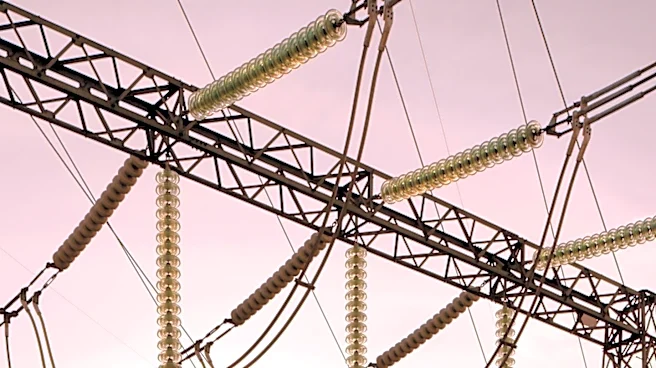
The CLEAR Act addresses a critical bottleneck in the expansion and modernization of the U.S. energy grid: the lengthy and often litigious permitting process for large energy infrastructure projects. Delays in building new transmission lines contribute to higher electricity rates for consumers, as existing grids struggle to meet rising energy demand. By aligning judicial review standards for DOE-coordinated projects with those already used for hydropower and natural gas pipelines, the bill seeks to provide greater certainty for developers and stakeholders. This could lead to faster deployment of essential infrastructure, which is crucial for integrating new energy sources, enhancing grid reliability, and supporting economic growth. The bipartisan nature of the bill signals a shared recognition of the urgent need to improve energy infrastructure efficiency across political divides.
What's Next?
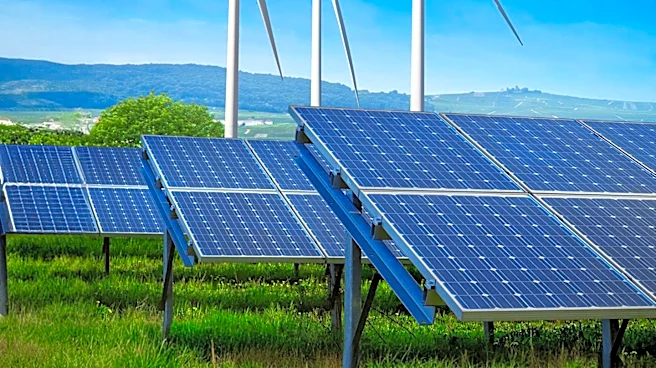
The CLEAR Act will now proceed through the legislative process in Congress, where it will be subject to committee review, potential amendments, and votes in both the House and Senate. Its bipartisan sponsorship suggests it may garner significant support, but it could still face opposition from groups concerned about environmental review processes or potential impacts on local communities. If enacted, the bill would significantly alter the legal framework for challenging large energy transmission projects, potentially reducing the time and cost associated with litigation. This could lead to a more rapid buildout of power lines, facilitating the connection of remote renewable energy projects to population centers and strengthening the overall resilience of the national grid. Stakeholders, including energy developers, environmental groups, and state and local governments, will closely monitor its progress and potential implications.
Beyond the Headlines
The introduction of the CLEAR Act highlights a broader national conversation about the balance between environmental protection, community engagement, and the urgent need for infrastructure development to support energy transition and economic growth. While streamlining permitting processes can accelerate project delivery, it also raises questions about ensuring robust environmental safeguards and adequate public participation. The shift to Federal Power Act judicial review standards could reduce avenues for legal challenges, which some may view as limiting public oversight. This legislative effort reflects a growing consensus that the current pace of infrastructure development is insufficient to meet future energy demands and climate goals, prompting a re-evaluation of regulatory frameworks to find more efficient pathways for critical projects while still addressing legitimate concerns.