


What's Happening?
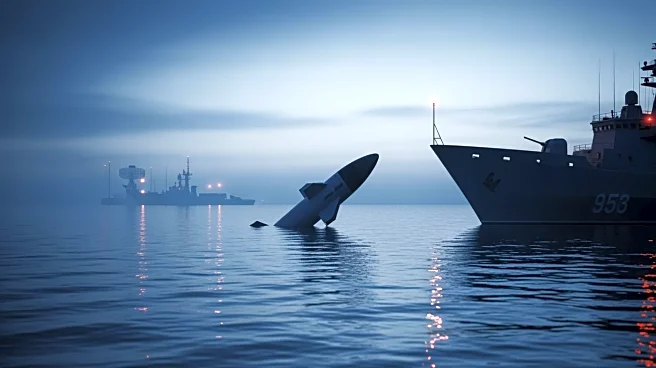
Iran is reportedly close to finalizing a deal with China to acquire advanced CM-302 supersonic anti-ship cruise missiles. This development comes as the United States has deployed significant naval forces, including aircraft carriers, near Iran amid escalating
tensions over Tehran's nuclear program. The negotiations for these missiles, which began over two years ago, have accelerated following a recent conflict between Israel and Iran. The CM-302 missiles, known for their ability to evade shipborne defenses, would enhance Iran's capability to threaten naval vessels in the region. The potential sale highlights the strengthening military ties between China and Iran, complicating U.S. efforts to curb Iran's missile and nuclear ambitions. The White House has not directly addressed these negotiations, but President Trump has indicated that Iran must reach an agreement over its nuclear program or face possible military action.
Why It's Important?
The potential missile sale underscores the deepening military cooperation between China and Iran, which could shift the strategic balance in the Middle East. For the United States, this development poses a significant challenge as it seeks to limit Iran's military capabilities and influence in the region. The acquisition of advanced Chinese missiles by Iran could undermine U.S. naval operations and increase the risk of military confrontations. Additionally, this deal could test the effectiveness of U.N. sanctions reimposed on Iran, raising questions about international enforcement mechanisms. The situation also reflects broader geopolitical tensions, with China and Russia supporting Iran against U.S. pressure, potentially leading to a more polarized global landscape.
What's Next?
If the missile deal is completed, it could lead to increased military tensions in the Middle East, particularly between Iran and the United States. The U.S. may respond by bolstering its military presence in the region or pursuing diplomatic efforts to counterbalance Iran's enhanced capabilities. The international community, including the U.N., may face pressure to address the implications of such military transactions and their impact on regional stability. Furthermore, the deal could prompt other countries in the region to seek similar military enhancements, potentially leading to an arms race. The U.S. and its allies will likely continue to monitor the situation closely and consider strategic responses to maintain regional security.
Beyond the Headlines
The potential missile sale to Iran highlights the complex interplay of international alliances and the challenges of enforcing global non-proliferation norms. It raises ethical questions about the responsibilities of major powers like China in contributing to regional arms buildups. The deal also reflects the shifting dynamics of global power, with China asserting its influence in the Middle East, traditionally a region of U.S. strategic interest. This development could have long-term implications for U.S.-China relations and the broader geopolitical landscape, as countries navigate the balance between national security interests and international diplomatic commitments.