





What's Happening?
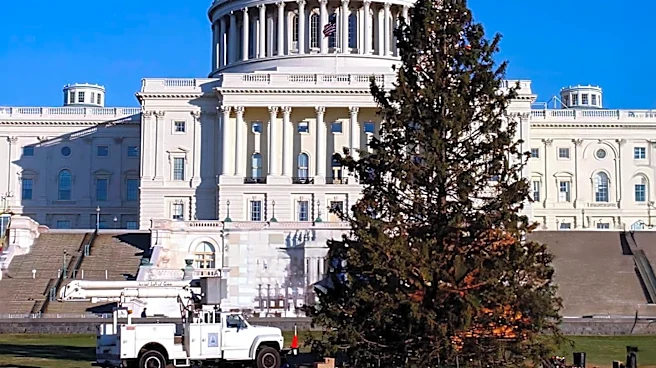
The U.S. Capitol Christmas Tree, a 76-foot Engelmann Spruce named 'Sew’isnimeepeme' by the Nez Perce Tribe, has commenced its journey from the Nez Perce-Clearwater National Forest in north-central Idaho to the west lawn of the U.S. Capitol. This tradition,
where the U.S. Forest Service provides the 'People's Tree' from one of its 154 national forests, has been ongoing since 1970. The host forest is responsible for selecting the tree, creating thousands of ornaments, and coordinating the logistics of its multi-week whistle-stop tour across the country. The Nez Perce Tribe blessed the tree before its departure, with its name meaning 'One from Musselshell,' referencing a historically significant gathering place for the tribe. The tree's journey includes several stops in various states before reaching Washington D.C.
Why It's Important?
This annual tradition holds significant cultural and symbolic importance for the United States. It represents a connection between the nation's diverse landscapes and its capital, highlighting the role of national forests in providing natural resources and fostering community spirit. The involvement of the Nez Perce Tribe in naming and blessing the tree underscores the importance of indigenous heritage and stewardship in relation to public lands. The multi-week tour allows communities across the country to participate in the celebration, fostering a sense of national unity and shared heritage. Furthermore, the event serves as a public relations opportunity for the U.S. Forest Service, raising awareness about the value of national forests and the work involved in their management and conservation. The tree's journey also provides a tangible link between rural communities and the federal government, showcasing the unique qualities of different regions on a national stage.
What's Next?
The U.S. Capitol Christmas Tree will continue its cross-country tour, making scheduled stops in various cities and towns. These stops include Sheridan, Wyoming; Custer, South Dakota; Mitchell, South Dakota; Albert Lea, Minnesota; Peoria, Illinois; Richmond, Indiana; Morgantown, West Virginia; Hagerstown, Maryland; Littlestown, Pennsylvania; and Joint Base Andrews, Maryland. The public can follow the tree's progress online through social media channels and the Capitol Christmas tree website. The journey will culminate with the tree's arrival at the U.S. Capitol, followed by the official lighting ceremony in early December. Details for the lighting ceremony will be announced, inviting the public to witness this annual event. The ornaments created by community members will adorn the tree, symbolizing widespread participation.
Beyond the Headlines
Beyond the festive spectacle, the journey of the U.S. Capitol Christmas Tree carries deeper implications regarding national identity and environmental consciousness. The selection of a tree from a different national forest each year subtly educates the public about the vastness and diversity of America's natural landscapes and the importance of their preservation. The collaboration between the U.S. Forest Service and indigenous communities, as exemplified by the Nez Perce Tribe's involvement, highlights a growing recognition of traditional ecological knowledge and the need for inclusive approaches to land management. The 'People's Tree' also serves as a reminder of the shared responsibility in maintaining these natural treasures for future generations. It fosters a sense of collective ownership and pride in national resources, transcending political divides through a common appreciation for nature and tradition.