



What's Happening?
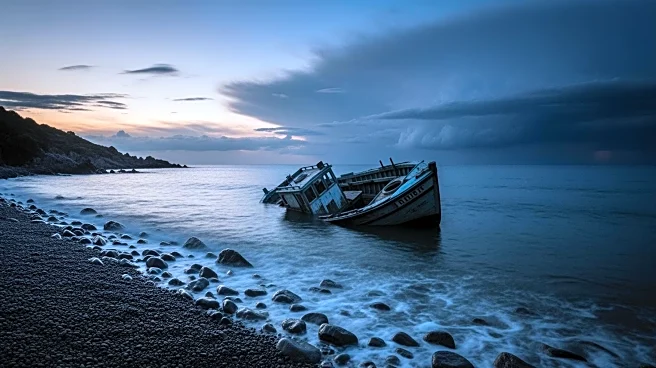
A tragic incident occurred off the coast of Libya where a migrant boat capsized, leading to the death or disappearance of 53 individuals, including two babies. The International Organization for Migration (IOM) reported that in January alone, at least
375 migrants were reported dead or missing due to shipwrecks in the central Mediterranean, exacerbated by extreme winter weather conditions. Despite these repeated tragedies, migrants continue to attempt the perilous crossing. Conditions for migrants in Libya are dire, with documented instances of torture, trafficking, forced labor, and other abuses by both state and non-state actors. The IOM has called for stronger international cooperation to dismantle smuggling and trafficking networks and to create safe and legal migration pathways to reduce deaths at sea.
Why It's Important?
The ongoing migrant crisis in the Mediterranean highlights the urgent need for international intervention and cooperation. The high death toll underscores the dangerous conditions faced by migrants attempting to reach Europe, often driven by desperation and dire circumstances in their home countries. The situation in Libya, a key transit point, is particularly concerning due to the widespread human rights abuses reported. The IOM's call for action emphasizes the necessity of addressing the root causes of migration and improving conditions for migrants. This crisis impacts not only the migrants and their families but also poses significant challenges for European countries in terms of humanitarian response and border management.
What's Next?
The international community faces pressure to respond to the migrant crisis with effective solutions. Potential next steps include increased diplomatic efforts to stabilize conditions in Libya and other transit countries, as well as the development of legal migration pathways to prevent further loss of life. Countries may also need to enhance their search and rescue operations in the Mediterranean to better respond to emergencies. The situation demands coordinated efforts from governments, NGOs, and international organizations to address both immediate humanitarian needs and long-term migration challenges.
Beyond the Headlines
The migrant crisis in the Mediterranean raises ethical and legal questions about the responsibilities of nations to protect vulnerable populations. The ongoing tragedies highlight the need for a reevaluation of international migration policies and the role of human rights in shaping these policies. The crisis also reflects broader geopolitical dynamics, including the impact of conflict and instability in regions like North Africa and the Middle East on global migration patterns.