


What's Happening?
Paul Sokoloski, a 57-year-old emergency room doctor from Hershey, Pennsylvania, died in a collision between his Cessna 150 airplane and a Pennsylvania State Police helicopter at Carlisle Airport. The incident occurred on a Wednesday evening while Sokoloski's
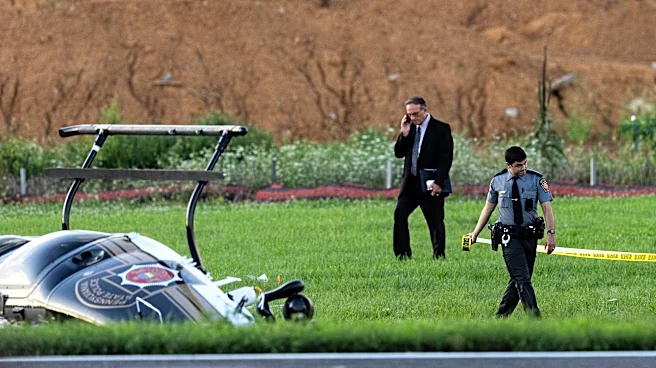
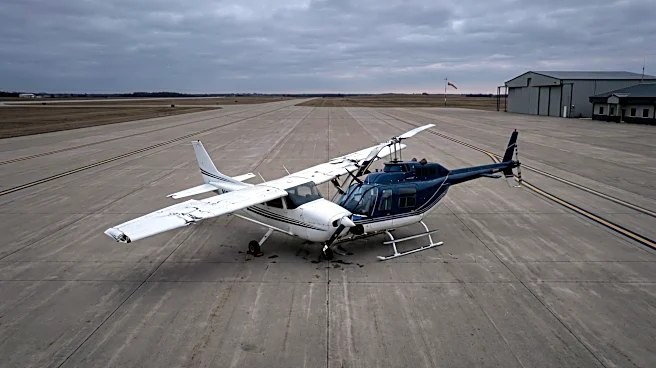
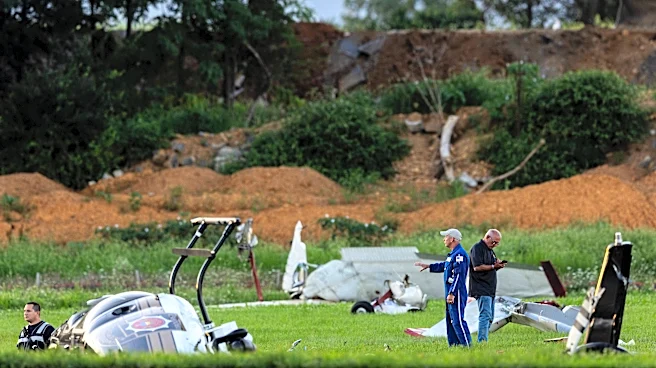
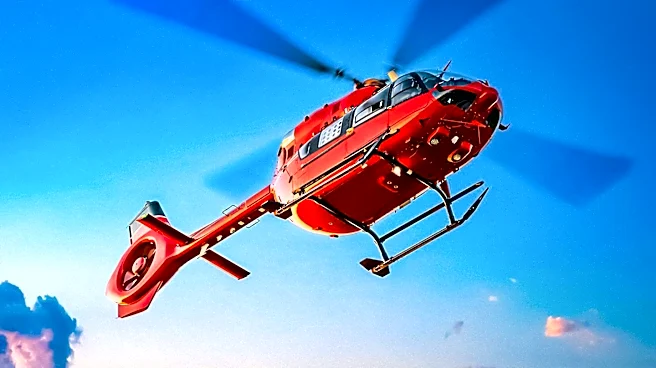
plane was attempting to land. According to state police, the Cessna veered off the runway and collided with the rear of the hovering PSP helicopter. Sokoloski was the sole occupant of the plane. Two state troopers in the helicopter, Cpl. Bryce Corman and Trooper Jason Mills, were injured and airlifted to Penn State Health Milton S. Hershey Medical Center. Corman has since been released, while Mills remains hospitalized in stable condition. The National Transportation Safety Board (NTSB), Federal Aviation Administration (FAA), and state police are investigating the crash.
Why It's Important?
This tragic incident underscores the inherent risks associated with aviation, even in controlled environments like airports, and highlights the critical importance of air traffic communication and safety protocols. The death of an emergency room doctor represents a significant loss to the healthcare community, particularly in a region where medical professionals are vital. The injuries sustained by the state troopers also emphasize the dangers faced by law enforcement personnel during training exercises. The ongoing investigation by the NTSB, FAA, and state police is crucial for identifying the cause of the collision, which could lead to revised aviation safety regulations or enhanced training procedures for pilots and air traffic controllers. This event could also prompt a review of safety measures at smaller, uncontrolled airports that rely on common traffic advisory frequencies (CTAF) for communication.
What's Next?
Investigators from the NTSB, FAA, and Pennsylvania State Police will continue their detailed examination of the crash site. The wreckage of both the Cessna and the helicopter will be transported to a secure hangar in Clayton, Delaware, for further analysis to determine the precise sequence of events and contributing factors. This investigation will involve reviewing flight data, air traffic communications, and witness accounts. The findings could lead to recommendations for changes in aviation safety regulations, pilot training, or airport operational procedures, particularly for airports without control towers. The legal and insurance implications for the involved parties will also unfold as the investigation progresses. The community will likely mourn the loss of Dr. Sokoloski, and the recovery of Trooper Mills will be closely monitored.
Beyond the Headlines
The collision at Carlisle Airport brings to light the complex interplay of human factors, mechanical performance, and environmental conditions in aviation safety. The fact that the pilot was a certified flight instructor and was reportedly aware of the helicopter's presence raises questions about communication breakdowns or unexpected maneuvers. This incident could spark a broader discussion within the aviation community about the adequacy of current communication protocols at uncontrolled airports and the potential for technological solutions to enhance situational awareness for pilots. Furthermore, the loss of an emergency room doctor highlights the vulnerability of essential service providers and the ripple effect such tragedies have on communities. The investigation's findings will not only aim to prevent future accidents but may also contribute to the ongoing evolution of aviation safety standards and training methodologies, emphasizing the continuous need for vigilance and adaptation in air travel.