

What's Happening?
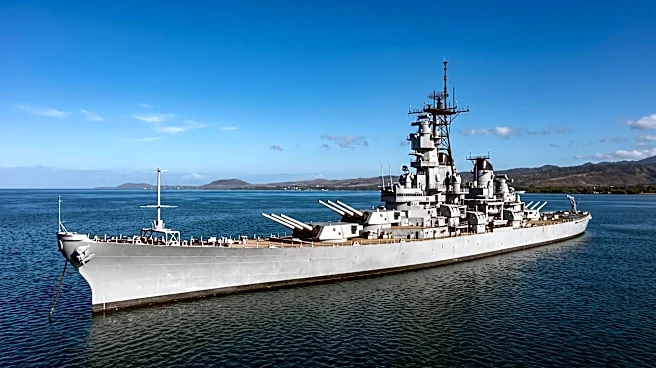
On September 2, 1945, World War II officially concluded with Japan's formal surrender aboard the USS Missouri in Tokyo Bay. Foreign Minister Mamoru Shigemitsu and General Yoshijiro Umezu represented Japan, while General Douglas MacArthur, Admiral Chester
Nimitz, and representatives from other Allied nations signed on behalf of the Allies. This ceremony, lasting approximately 20 to 30 minutes, marked the end of a six-year global conflict. The surrender followed the atomic bombings of Hiroshima and Nagasaki in August 1945 and the Soviet Union's offensive against Japanese forces in Manchuria, which collectively pressured Japan to accept the terms of the Potsdam Declaration. President Harry Truman declared September 2 as Victory over Japan Day (V-J Day) in the United States.
Why It's Important?
The formal surrender of Japan on September 2, 1945, is a monumental event in U.S. and world history, signifying the end of the deadliest conflict in human history. For the U.S., it marked the culmination of its involvement in World War II, bringing an end to years of fighting in the Pacific theater and immense sacrifices. This event reshaped the global political landscape, establishing the U.S. as a leading superpower and paving the way for the Cold War era. The use of atomic bombs, which preceded the surrender, also initiated a new age of nuclear warfare, profoundly influencing international relations and military strategy for decades to come. The end of the war allowed for the demobilization of millions of U.S. military personnel and the transition of the American economy from wartime production to peacetime prosperity.
What's Next?
The immediate aftermath of Japan's surrender involved the demobilization of millions of Japanese soldiers, the release of prisoners of war, and the extensive process of rebuilding war-torn regions. For the U.S., this meant overseeing the occupation and reconstruction of Japan, a process that profoundly influenced Japan's post-war democratic development and its alliance with the United States. Globally, the end of World War II led to the establishment of the United Nations, an international body designed to prevent future global conflicts. The U.S. would play a central role in this new international order, engaging in efforts to promote peace, economic recovery, and democratic governance worldwide. The legacy of the war, including the ethical considerations of atomic warfare, continues to be debated and remembered through commemorative events and historical studies.
Beyond the Headlines
The formal surrender on the USS Missouri carries deep symbolic weight, representing not just a military victory but also a profound shift in global power dynamics and the beginning of a new international order. The presence of representatives from numerous Allied nations underscored the collective effort required to end the war and the shared responsibility for shaping the post-war world. The event also highlights the immense human cost of the war, with tens of millions of lives lost and countless cities devastated, serving as a stark reminder of the destructive potential of unchecked aggression. The memory of September 2, while celebrated as V-J Day in the U.S., also prompts reflection on the complexities of war, the suffering of civilians, and the enduring challenge of achieving lasting peace and reconciliation among nations.