







What's Happening?
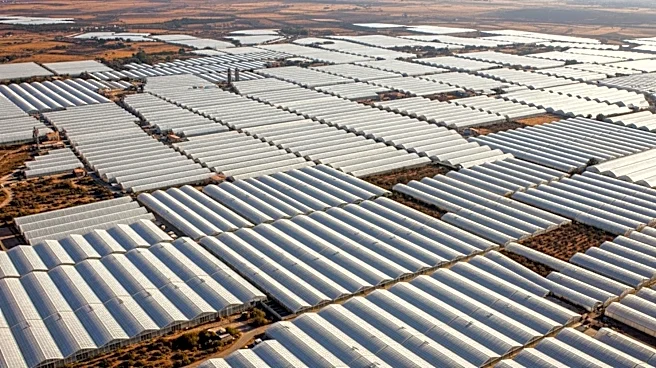
In Almería, Spain, a vast network of greenhouses, known as the 'Sea of Plastic,' is visible from space due to their bright white roofs. These greenhouses cover over 40,000 hectares and are a major source of fruits and vegetables for Europe. The reflective
polyethylene roofs create a shimmering effect, making them easily identifiable from orbit. While the greenhouses have transformed the region into a significant agricultural hub, they also pose environmental challenges, including plastic pollution and water scarcity.
Why It's Important?
The Almería greenhouses represent a significant achievement in agricultural innovation, allowing for the production of large quantities of produce in a previously barren area. However, the environmental costs are substantial. The extensive use of plastic contributes to pollution, and the high water demand strains local resources. These issues highlight the need for sustainable agricultural practices that balance productivity with environmental stewardship. The situation in Almería serves as a cautionary tale for other regions considering similar agricultural expansions.
Beyond the Headlines
The visibility of Almería's greenhouses from space underscores the impact of human activity on the planet. It raises questions about the sustainability of intensive agriculture and the long-term viability of such practices in arid regions. The reliance on plastic and water-intensive methods may not be sustainable in the face of climate change and increasing resource scarcity. This scenario calls for innovative solutions that reduce environmental impact while maintaining agricultural productivity, potentially influencing future agricultural policies and practices globally.