







What's Happening?
The U.S. Air Force's Warner Robins Air Logistics Complex has awarded a Phase III contract to Asylon, a robotics company, to implement a system that combines drone technology with ground-based robotic dogs for general visual inspections of aircraft and
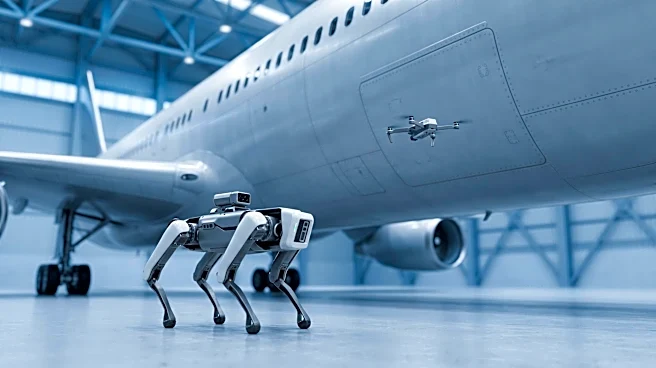
weapon systems. The Multi-modal Autonomous Robotics for Inspection of Aircraft (MARIA) system utilizes Asylon’s Guardian sUAS drone system and its DroneDog quadrupedal robot. These robotic platforms work in unison to perform digital mapping of an entire aircraft using cameras and lidar. The collected inspection data is then fed into Asylon’s back-end software, which allows for programming inspection paths and ingesting the data. This technology aims to significantly improve the speed and safety of aircraft inspections, reducing processes that previously took days or weeks to a matter of hours.
Why It's Important?
This integration of advanced robotics and artificial intelligence into aircraft maintenance represents a significant leap forward for the U.S. Air Force, enhancing operational efficiency and safety. By automating visual inspections, the Air Force can reduce the time aircraft spend in maintenance, thereby increasing fleet readiness and availability for critical missions. The technology also mitigates risks to human personnel who would otherwise perform inspections at height or in confined spaces. Furthermore, the consistency provided by pre-programmed inspection routes and AI-driven anomaly detection can lead to more thorough and reliable identification of defects, potentially preventing costly failures or safety incidents. This initiative underscores the broader trend of military adoption of autonomous systems to optimize logistics and support functions, freeing up human resources for more complex tasks and improving overall defense capabilities.
What's Next?
Asylon's immediate focus is on implementing the MARIA system for the Lockheed C-5 and C-130 aircraft at Warner Robins. The long-term goal is to expand this capability to all aircraft types at the complex and eventually across the larger Air Force Logistics Complex. Asylon also plans to enhance the MARIA system's capabilities, including improvements to its robotics and software, stronger artificial intelligence for anomaly detection, and potentially integrating 'humanoid fleet management' where robots could perform maintenance tasks alongside inspections. The company is actively working with the Air Force to program specific aircraft specifications and inspection locations into the system. This expansion and development indicate a future where autonomous systems play an even more central role in military maintenance and logistics, potentially influencing similar applications across other branches of the U.S. military and even in civilian aviation.
Beyond the Headlines
The deployment of robot dogs and drones for aircraft inspections highlights the increasing sophistication and practical application of AI and robotics in critical infrastructure maintenance. This technology not only addresses immediate operational needs but also raises broader questions about the future of labor in highly skilled technical fields. While these systems enhance efficiency and safety, they also necessitate a re-evaluation of human roles, shifting from manual inspection to oversight, programming, and advanced data analysis. The ethical implications of autonomous systems in military contexts, particularly regarding decision-making and accountability, will continue to be a subject of debate as these technologies become more prevalent. Moreover, the data collected by these systems could provide unprecedented insights into aircraft wear and tear, leading to more predictive maintenance strategies and potentially extending the lifespan of military assets, thereby impacting defense spending and resource allocation.