


What's Happening?
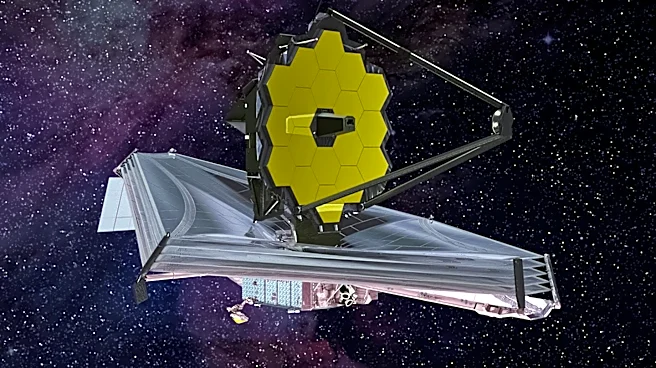
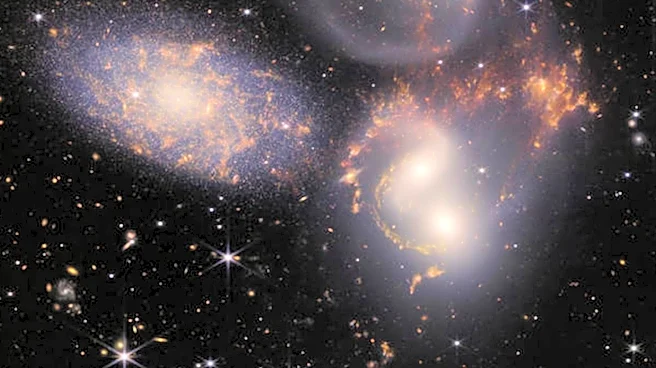
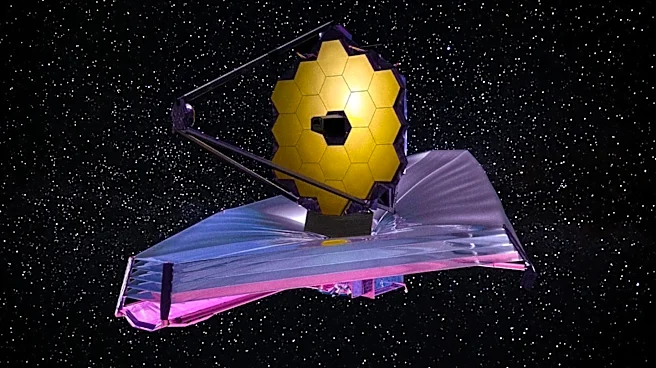
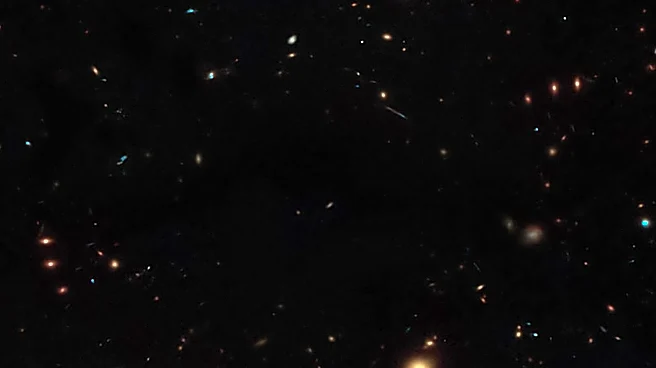
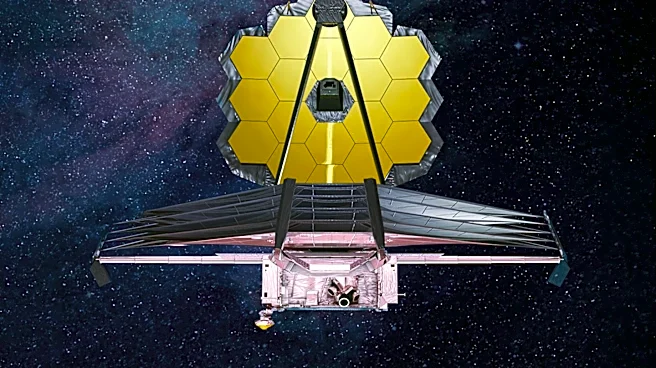
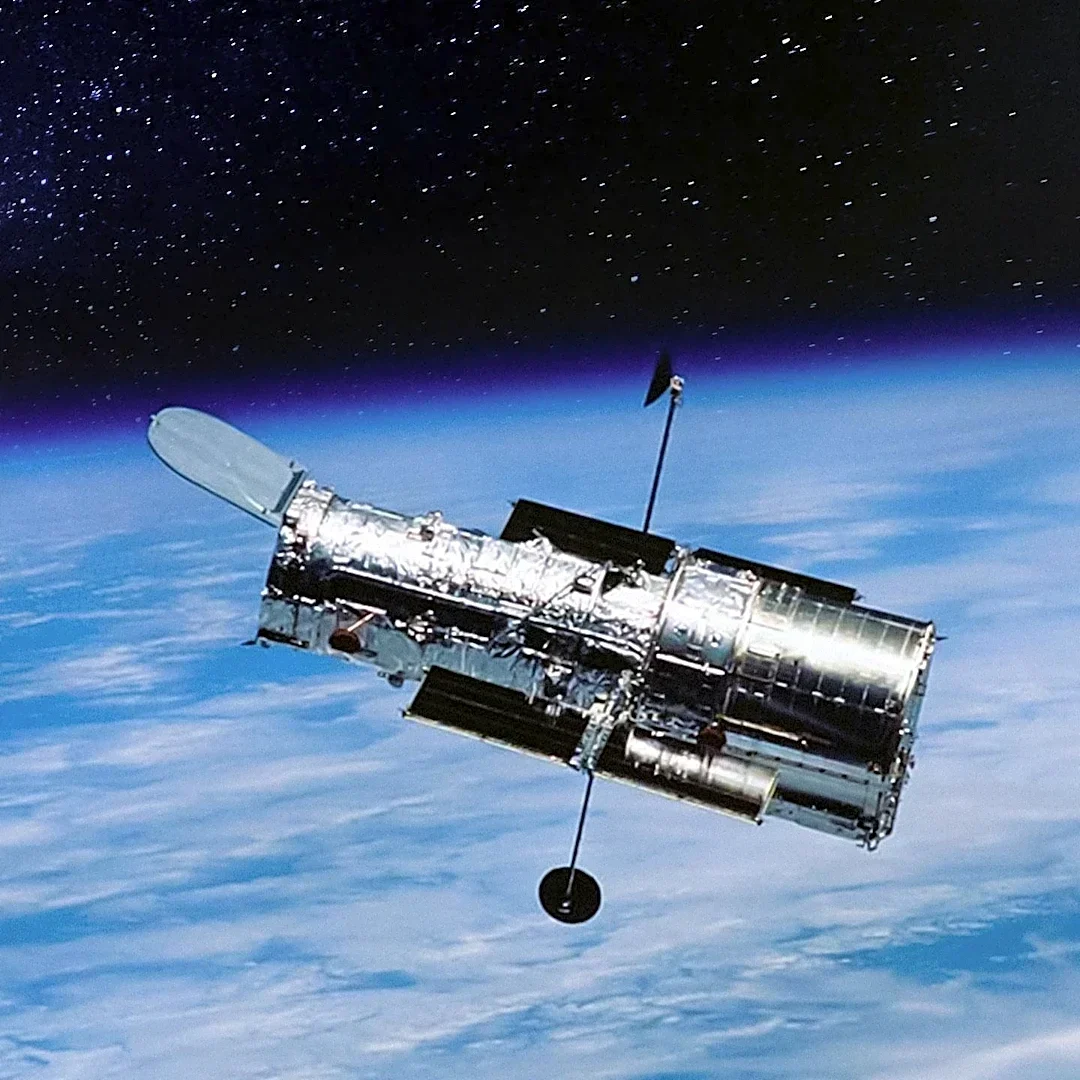
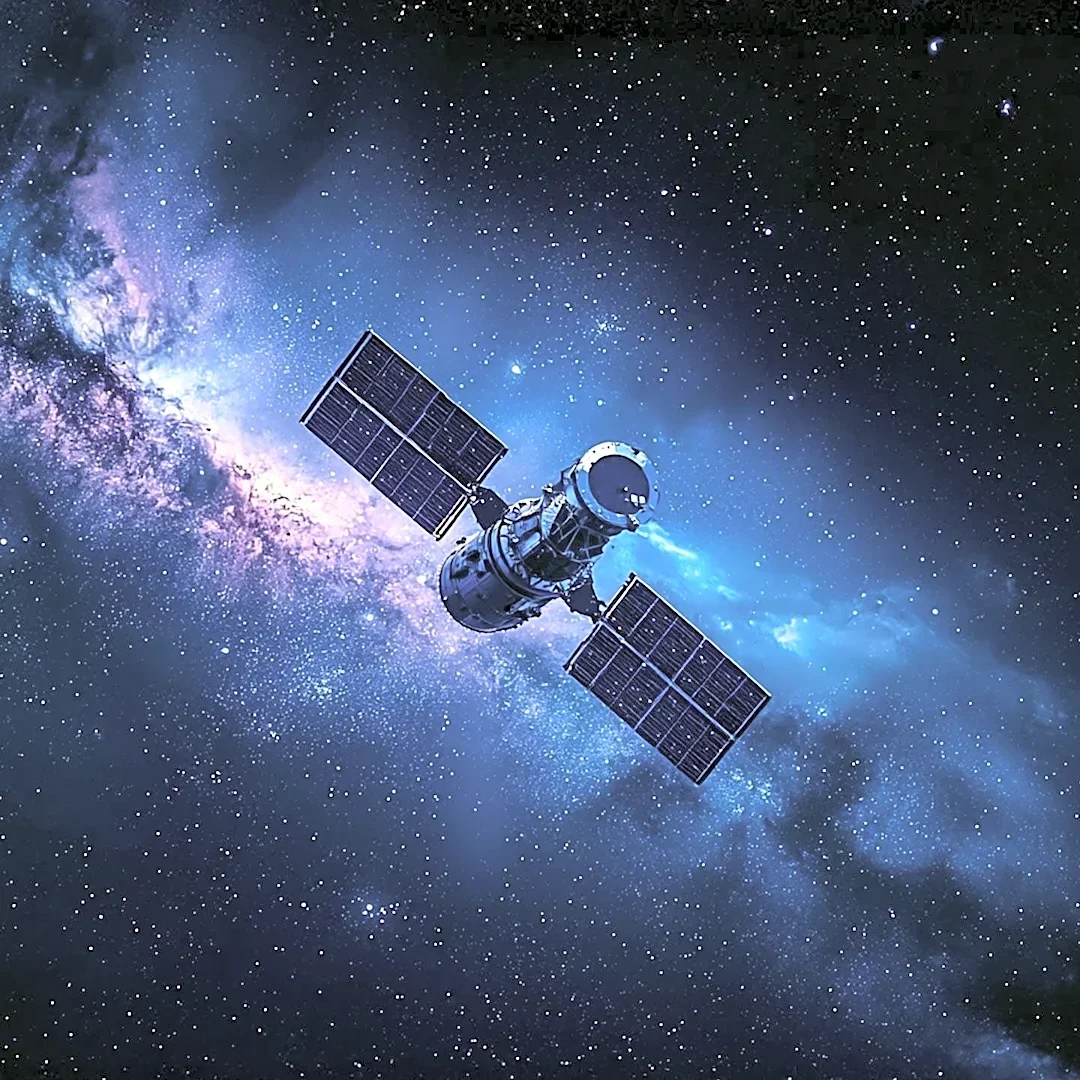
The James Webb Space Telescope (JWST) has detected a mysterious, bright signal in a tiny patch of the Ultra Deep Field (HUDF), a region of space extensively studied by both JWST and the Hubble Space Telescope. The signal, a single, bright line at about
1.6 micrometers in the near-infrared spectrum, appeared twice in observations nearly three months apart (August and November 2023) and was consistent across multiple exposures and observation angles. What makes this detection particularly puzzling is that prior observations from both JWST (including the JADES survey in October 2022) and Hubble showed absolutely nothing in that specific location. This suggests the signal either appeared suddenly or was previously too dim to detect, then briefly flared with powerful emission. Astronomers, including Mason Huberty of the University of Minnesota, are currently without a satisfying explanation for its origin.
Why It's Important?
This mysterious signal challenges current astronomical understanding and observational techniques. The fact that it was not present in earlier, highly sensitive observations from the same telescopes implies a transient event or a previously unknown phenomenon. Such an unexplained observation could lead to new discoveries about the universe, potentially revealing novel astrophysical processes, exotic objects, or even limitations in our current models of cosmic events. The meticulous methodology used by Huberty and his team, employing JWST's Near-Infrared Spectrograph (NIRSpec) to search for previously undetected objects, demonstrates innovative approaches to astronomical research. The inability to definitively identify the source from known phenomena (like distant galaxies, recent galaxies, supernovae, or black holes tearing apart stars) underscores the vast unknowns that still exist in space and the potential for groundbreaking insights.
What's Next?
Astronomers emphasize that follow-up observations are essential to confirm the redshift and determine the physical origin of the emission. Deeper, more sensitive spectroscopy is needed to potentially reveal additional emission lines, which would help definitively establish the distance and nature of the source. The research team will likely prioritize further observations of this specific region with JWST and possibly other telescopes to gather more data. The scientific community will be actively engaged in proposing and conducting these follow-up studies, as the resolution of this mystery could have significant implications for astrophysics and cosmology. The findings have been published in The Astrophysical Journal, inviting broader scientific scrutiny and collaboration.
Beyond the Headlines
The detection of an unexplained signal in a well-studied region of space taps into the fundamental human curiosity about the unknown. It highlights that even with the most advanced instruments like JWST, the universe continues to hold profound surprises. The challenge of identifying the source, given the lack of accompanying emission lines and its absence in previous observations, pushes the boundaries of our scientific imagination. This event could potentially lead to the discovery of entirely new classes of cosmic phenomena or force a re-evaluation of existing astrophysical theories. It serves as a powerful reminder that our understanding of the cosmos is constantly evolving and that each unexplained anomaly holds the potential for revolutionary scientific breakthroughs, inspiring future generations of astronomers and space enthusiasts.