






What's Happening?
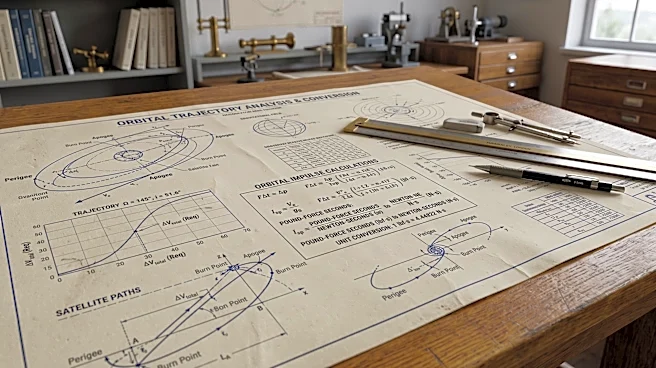
The European Space Agency (ESA) is offering an internship in its Technology Department, specifically within the Advanced Concepts Team. The internship focuses on the Keplerian Traveling Salesperson Problem (KTSP), a complex combinatorial optimization
problem relevant to spacecraft trajectory design. This problem involves a spacecraft visiting targets moving on Keplerian orbits, where transfer costs are time-dependent and asymmetric. KTSP has applications in active debris removal, in-orbit servicing, and multi-rendezvous mission planning. The intern will investigate the use of an open framework based on evolutionary search and compact open-source language models to automatically discover effective search strategies for large KTSP instances and variants. This involves surveying KTSP and related problems, developing new large instances, creating a modular representation of heuristic components, implementing an agentic framework for generating and refining heuristic variants, and benchmarking these strategies against existing methods.
Why It's Important?
This internship addresses a critical challenge in space mission planning: optimizing spacecraft trajectories for complex tasks. The KTSP is fundamental to missions like removing space debris, which is a growing concern for operational satellites and future launches. Efficient trajectory optimization can significantly reduce mission costs, fuel consumption, and operational time, making space activities more sustainable and economically viable. The use of advanced techniques like evolutionary computation and large language models (LLMs) for automated heuristic design represents a cutting-edge approach to solving these problems. If successful, this research could lead to more autonomous and efficient mission planning systems, benefiting both governmental space agencies and private aerospace companies by enabling more ambitious and cost-effective space operations. The development of robust and scalable solutions for KTSP is crucial for the long-term viability and expansion of space exploration and utilization.
What's Next?
The internship aims to develop and evaluate an LLM-based framework for the automatic discovery of search strategies for large KTSP instances. The immediate next steps involve a comprehensive survey of KTSP and related problems, followed by the development of new, larger instances of KTSP and its variants. Subsequently, the intern will focus on creating a modular representation of heuristic components, including Ant Colony Optimization (ACO) rules, beam-search policies, and Monte Carlo Tree Search (MCTS) rollout strategies. The core of the project will be the implementation of an agentic framework capable of generating, evaluating, selecting, and refining these heuristic variants. The final phase will involve benchmarking the automatically discovered strategies against manually designed ACO, beam search, MCTS, and hybrid baselines to assess their solution quality, runtime, robustness, and scalability. The findings from this internship could inform future developments in autonomous spacecraft mission planning.
Beyond the Headlines
The application of large language models and evolutionary computation to complex engineering problems like spacecraft trajectory optimization signifies a broader trend towards AI-driven solutions in highly specialized fields. This development could lead to a paradigm shift in how complex systems are designed and managed, moving away from purely human-designed heuristics to AI-discovered strategies. The ethical implications of increasingly autonomous systems in space, particularly for tasks like debris removal, will become more prominent. Ensuring the reliability and interpretability of AI-generated solutions will be crucial. Furthermore, the success of such frameworks could democratize access to advanced optimization techniques, potentially enabling smaller organizations or even academic groups to tackle problems previously requiring extensive human expertise and computational resources. This could accelerate innovation in space technology and other domains facing similar combinatorial optimization challenges.