
What's Happening?
A unique Boeing 737-200, designated NT-43A, operated by the US Air Force, was involved in monitoring NASA's Artemis II space launch. The aircraft, typically used for evaluating radar signatures of stealth aircraft, was observed by plane spotters over
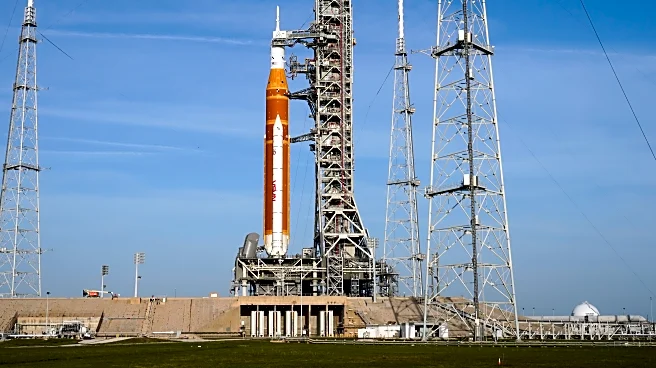
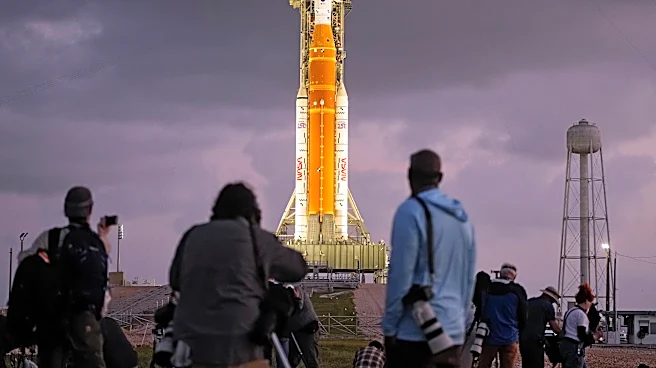
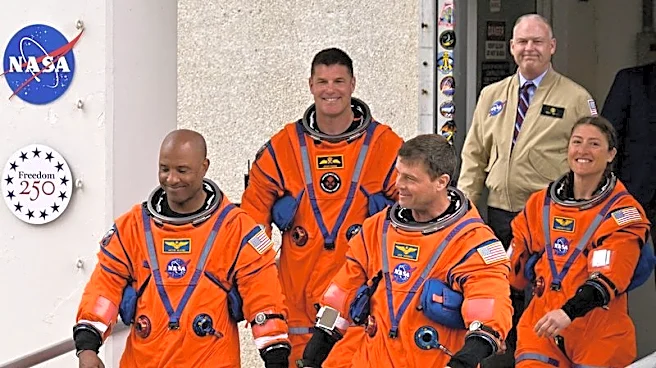
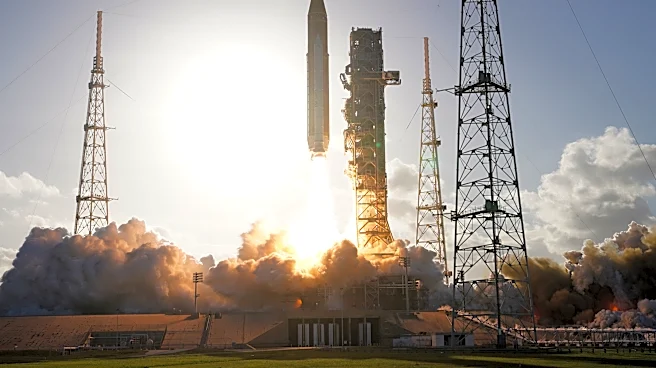
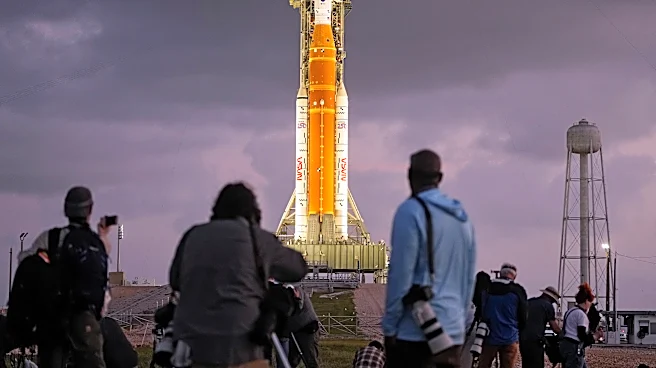
Florida during the launch. The Boeing Space Launch System (SLS) rocket carried four astronauts on a mission to orbit the moon. The NT-43A took off from MacDill AFB in Tampa and maintained a holding pattern offshore near Cape Canaveral during the launch. The airspace was restricted to civil aviation by a NOTAM alert from the FAA. The NT-43A returned to Tampa after the successful launch, with a flight time of under two hours. The specific role of the NT-43A in the mission remains undisclosed.
Why It's Important?
The involvement of the NT-43A in the Artemis II launch highlights the strategic importance of stealth technology and radar evaluation in modern aerospace operations. The aircraft's participation suggests a potential focus on monitoring and testing stealth capabilities during significant space missions. This could have implications for future aerospace defense strategies and collaborations between NASA and the Department of Defense. The Artemis II mission itself marks a significant step in NASA's efforts to return humans to the moon, with broader implications for international space exploration and competition.
What's Next?
The successful launch of Artemis II sets the stage for future missions aimed at establishing a sustainable human presence on the moon. The role of the NT-43A may be further clarified in subsequent missions, potentially involving more advanced stealth and radar technologies. NASA's Artemis program is expected to continue collaborating with various defense and aerospace entities, which could lead to new technological developments and strategic partnerships.