




What's Happening?
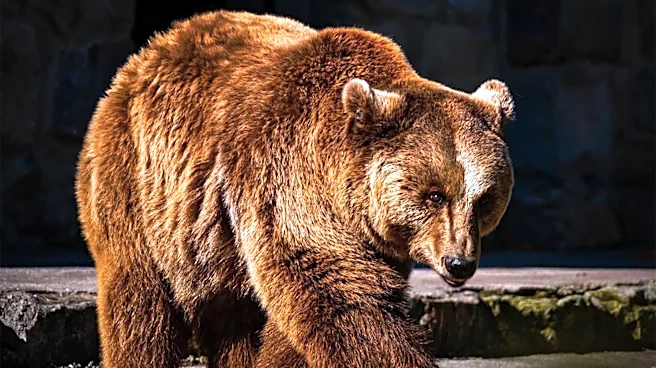
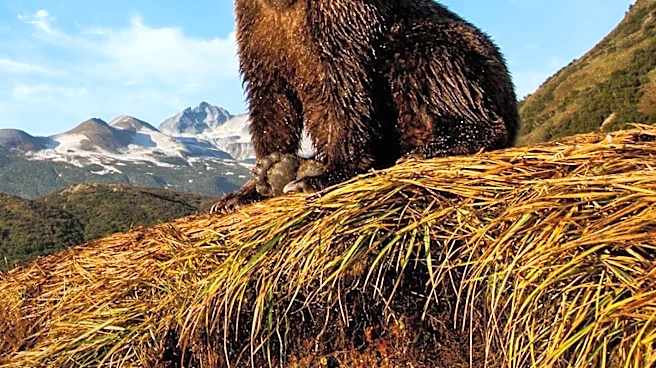
A live bearcam at Brooks Falls in Katmai National Park, Alaska, has become a significant online hit this summer, attracting 7.3 million views between June 22 and August 4. This represents a 70% increase from the same period last year and more than double
the views recorded in 2024. The livestream showcases brown bears congregating around Brooks Falls to catch sockeye salmon as they travel upstream, a crucial food source for the bears. The increased viewership is attributed to the unusually large number of bears gathering at the falls this year, providing viewers with clear and consistent activity. Last year, salmon were more dispersed, leading to fewer bear congregations at the falls. Candice Rusch from Explore, the wildlife network operating the cameras, noted that the livestream has become a popular background activity for many viewers.
Why It's Important?
The immense popularity of the Brooks Falls bearcam highlights a growing public interest in nature and wildlife observation, even from remote locations. This phenomenon demonstrates the power of digital platforms to connect a global audience with natural ecosystems, fostering a sense of appreciation and awareness for wildlife conservation. Dr. Jeffrey Skibins, an associate professor at East Carolina University, emphasizes that nature-based webcams benefit both wildlife and people by improving conservation attitudes, behaviors, and awareness. For the U.S., this trend can contribute to increased support for national parks and wildlife protection initiatives, potentially influencing funding and policy decisions related to environmental conservation. The ability to observe bears in their natural habitat also offers educational value, allowing viewers to learn about bear behavior and the importance of salmon runs to their survival.
What's Next?
The continued success of the Brooks Falls bearcam is likely to encourage similar initiatives in other national parks and wildlife areas, expanding opportunities for public engagement with nature. As the bears prepare for colder months, the annual 'Fat Bear Week' competition, where the public votes for the fattest bear, is expected to draw even more attention to the livestream. This event further gamifies wildlife observation, potentially attracting new audiences and deepening engagement. The trend of using webcams for conservation and education is expected to grow, with more organizations investing in similar technologies to bring remote wildlife experiences into homes worldwide. This could lead to innovative approaches in environmental education and public outreach.
Beyond the Headlines
The success of the bearcam points to a deeper human need for connection with nature, even if it's through a screen. In an increasingly urbanized and digital world, these livestreams offer a therapeutic escape and a reminder of the wild. The phenomenon of viewers tracking individual bears and their eating habits, as noted by Rusch, suggests a form of parasocial relationship with wildlife, fostering empathy and a sense of stewardship. This engagement can translate into real-world conservation efforts, as people who feel connected to these animals are more likely to support their protection. The bearcam also serves as a powerful tool for scientific observation, providing continuous data on bear populations, feeding patterns, and ecosystem health, which can inform research and management strategies for wildlife conservation.