




What's Happening?
The National Park Service (NPS) at Glacier Bay National Park and Preserve is actively recruiting a seasonal Fish Biologist (GS-0482-09) for the upcoming season, spanning from late April to October 2027, with potential for extension. The position is based
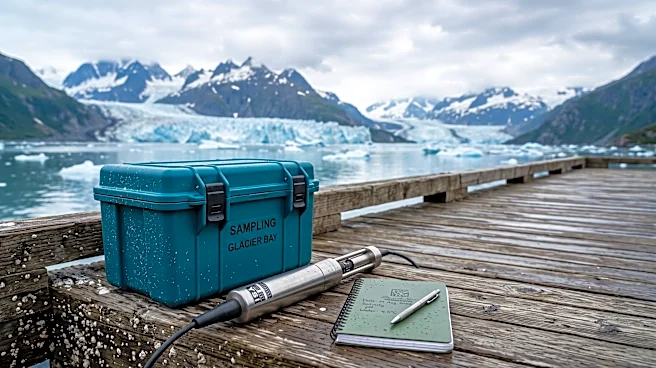
at Bartlett Cove, Alaska. This role will primarily involve marine-based fisheries surveys, research into pelagic food webs, monitoring fisheries harvest, and addressing marine invasive species. The application period for this position is from November 16 to November 23, or until 125 applications have been received. Interested individuals, including all U.S. citizens, can find the job announcement on USAJOBS. Alexandra Gulick is the contact person for prospective applicants with questions regarding the position.
Why It's Important?
This recruitment highlights the ongoing commitment of the National Park Service to scientific research and environmental management within critical ecosystems like Glacier Bay National Park. The focus on marine-based fisheries surveys, pelagic food webs, and marine invasive species underscores the complex ecological challenges facing Alaska's coastal environments. The data collected by this seasonal biologist will be crucial for understanding the health and sustainability of marine life, informing conservation strategies, and managing natural resources effectively. The work directly contributes to the preservation of biodiversity and the ecological integrity of one of the nation's most pristine national parks, impacting future policy decisions related to marine conservation and resource allocation in the region.
What's Next?
The application window for the seasonal Fish Biologist position is currently open and will close on November 23, 2026, or once 125 applications are submitted. Following the application period, the National Park Service will proceed with the selection process, aiming to fill the role for a starting date of April 26, 2027. The selected candidate will then commence work on critical marine ecosystem projects, contributing to the park's scientific understanding and management efforts. The findings from these projects could lead to new conservation initiatives or adjustments in existing management practices within Glacier Bay National Park and Preserve.
Beyond the Headlines
The continuous need for seasonal biologists in national parks like Glacier Bay reflects a broader trend in environmental science, where long-term data collection is essential for understanding and responding to ecological changes. The emphasis on marine invasive species, in particular, points to the increasing threat these organisms pose to native ecosystems and the significant resources required for their detection and management. This position also underscores the collaborative nature of conservation, often involving federal agencies, local communities, and scientific experts working together to protect natural heritage. The insights gained from such roles can influence national environmental policies and contribute to global efforts in marine conservation.