



What's Happening?
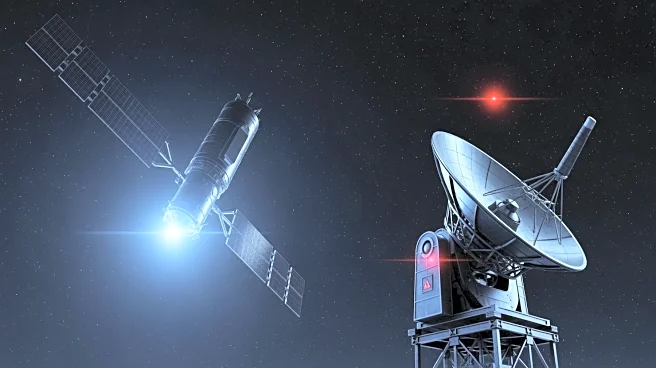
Western intelligence suggests that Russia is developing a new anti-satellite weapon aimed at Elon Musk's Starlink constellation. The weapon reportedly involves releasing high-density pellets to disable multiple satellites, potentially causing widespread
damage to orbiting systems. This development is seen as an attempt to counter Western space superiority, which has been crucial for Ukraine's military communications. Analysts express skepticism about the feasibility of such a weapon, citing potential chaos in space that could affect Russia and its allies.
Why It's Important?
The potential development of this weapon highlights the increasing militarization of space and the strategic importance of satellite networks in modern warfare. Starlink has been vital for Ukraine's battlefield communications, making it a target for Russian countermeasures. The implications of such a weapon extend beyond military conflict, as it could disrupt global satellite operations, affecting communications, navigation, and other critical services. The situation underscores the need for international regulations to prevent the weaponization of space.
What's Next?
If Russia proceeds with this development, it could lead to heightened tensions and an arms race in space technology. The international community may push for diplomatic talks to address the risks of space weaponization. Meanwhile, countries reliant on satellite technology will likely invest in protective measures and alternative communication systems to mitigate potential threats.
Beyond the Headlines
The ethical and legal implications of deploying such a weapon are significant, as it could violate international treaties on the peaceful use of space. The potential for collateral damage raises questions about accountability and the long-term sustainability of space activities. This development may prompt a reevaluation of global space policies and the establishment of new norms to prevent similar threats.