






What's Happening?
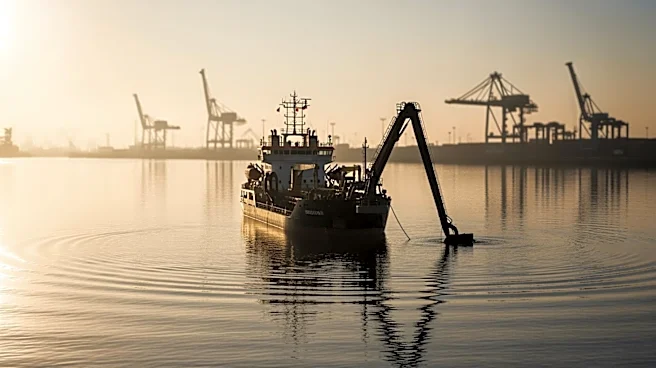
The Port of Gothenburg has entered into a contract with Boskalis Sweden AB for blasting and dredging operations as part of the Skandia Gateway project. This initiative aims to increase the port's capacity to accommodate larger vessels by deepening the fairway
from the current 13.5 meters to a maximum of 17.5 meters. The contract is valued at approximately SEK 202 million (around EUR 18 million). The project is a strategic effort to secure Sweden's direct access to global shipping routes, as the current fairway depth limits the ability of large vessels to fully load at the port. The Port of Gothenburg, the largest in Scandinavia, is the only Swedish port capable of handling the world's largest ocean-going vessels. The dredging and blasting works are scheduled to occur from October 2026 to March 2027, with the Swedish Maritime Administration taking over subsequent dredging responsibilities in autumn 2027.
Why It's Important?
This project is crucial for maintaining and enhancing Sweden's position in global maritime trade. By increasing the fairway depth, the Port of Gothenburg will be able to accommodate larger vessels, which is essential as global shipping trends move towards larger container ships. This development is expected to boost the port's competitiveness and operational efficiency, potentially attracting more international shipping lines. The project also underscores the importance of infrastructure upgrades in supporting economic growth and trade facilitation. For Sweden, this means improved access to international markets, which could have positive ripple effects on the national economy, including job creation and increased trade volumes.
What's Next?
Following the completion of the port's dredging and blasting works, the Swedish Maritime Administration will begin dredging the fairway outside the port area in autumn 2027. This phase will ensure that the entire approach to the port is capable of handling larger vessels. The successful execution of this project will likely prompt further infrastructure investments in the region, as stakeholders aim to capitalize on the enhanced shipping capabilities. Additionally, the project may influence other ports in Scandinavia to consider similar upgrades to remain competitive in the evolving maritime industry.