


What's Happening?
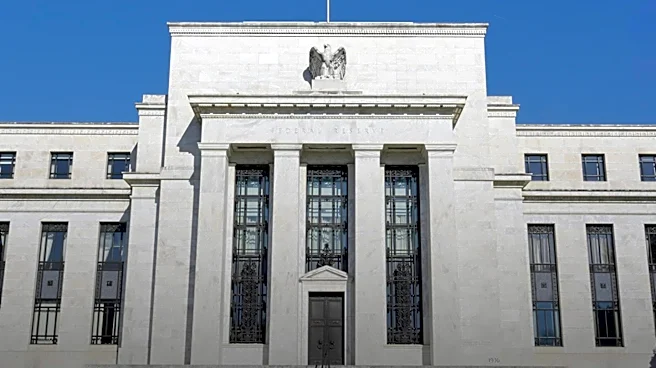
The US Federal Reserve's preferred inflation gauge, the Personal Consumption Expenditures (PCE) price index, rose by 3.6 percent year-on-year in September. This increase follows a period where core inflation measures, which exclude volatile food and energy
prices, have consistently remained above the Fed’s 2% target. Specifically, core PCE reached 3.1% and core CPI hit 2.6% in September. While both indices generally track each other, core CPI has historically shown more volatility and has been higher than core PCE nearly 80% of the time since 1960. The COVID-19 pandemic led to the highest inflation rates since the early 1980s, with core PCE peaking at 5.57% in February 2022 and core CPI at 6.63% in September 2022. Although these figures have declined, recent data indicates that inflation is stalling above the Federal Reserve's target.
Why It's Important?
The persistent elevation of inflation above the Federal Reserve's 2% target has significant implications for the U.S. economy and its citizens. High inflation erodes purchasing power, making everyday goods and services more expensive for households. This situation can lead to increased financial strain, particularly for working-class families, as their wages may not keep pace with rising costs. For businesses, sustained inflation can increase operational expenses, potentially leading to higher prices for consumers or reduced profit margins. The Federal Reserve's mandate includes achieving price stability, and the current inflation levels suggest that this goal remains challenging. The Fed's reliance on the PCE index, due to its broader scope and less volatile nature compared to the CPI, underscores the importance of these figures in guiding monetary policy decisions, such as interest rate adjustments. The ongoing inflation debate also highlights the differing economic experiences across various income brackets, with wealthier households potentially better equipped to absorb rising costs than those with more limited financial resources.
What's Next?
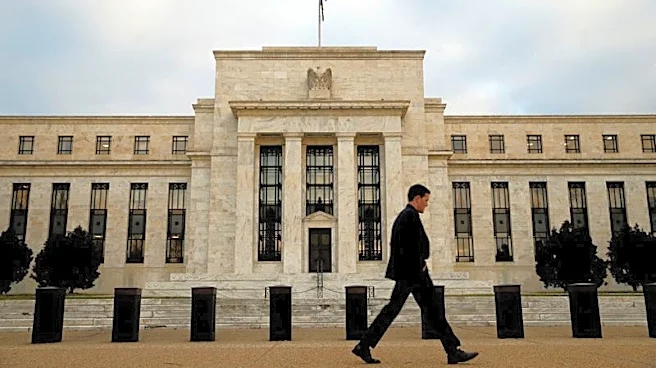
The Federal Reserve recently maintained the federal funds rate at 3.75%–4%, but markets largely anticipate a 25 basis point rate hike in December. This expected move reflects the Fed's ongoing commitment to combating inflation and achieving its 2% target, despite the 'last mile' of the inflation fight proving difficult. Policymakers will continue to closely monitor inflation data, particularly the PCE and CPI, to assess the effectiveness of their monetary policy. Future decisions on interest rates will depend on how these inflation measures evolve and whether they show a sustained trend towards the target. The economic environment, including factors like consumer spending and investment, will also influence the Fed's approach. The upcoming midterm elections could also see economic performance, particularly inflation, remain a key issue for voters, potentially influencing political discourse and policy priorities.
Beyond the Headlines
The ongoing struggle with inflation extends beyond immediate economic indicators, touching upon deeper societal and political dimensions. The exclusion of food and energy from 'core' inflation measures, while useful for economists to identify underlying trends, often creates public confusion and frustration, as these are essential monthly expenses for most households. This discrepancy can lead to a disconnect between official economic narratives and the lived experiences of ordinary citizens, potentially fueling public skepticism about economic policies. Furthermore, the debate over inflation's causes and solutions can become highly politicized, with different political factions attributing blame and proposing divergent remedies. The long-term implications of sustained inflation could include shifts in consumer behavior, investment patterns, and potentially a re-evaluation of the Federal Reserve's monetary policy tools and communication strategies to better address public understanding and trust.