







What's Happening?
The U.S. International Development Finance Corporation (DFC) is actively funding rare-earth projects across Africa, committing $62.8 million to initiatives in Malawi, Angola, Madagascar, and South Africa. This intervention comes as private investors have
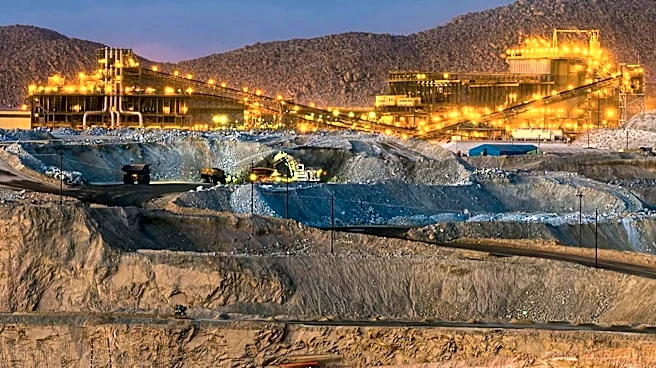
largely shied away from financing these projects due to their high-risk profile and concerns over potential Chinese market interventions that could destabilize pricing and project economics. A significant portion of this funding, approximately $50 million, has been allocated to the Phalaborwa project in South Africa, backed by Dublin-based mining investor TechMet. Despite the DFC's investments, none of these projects have yet reached production. Two senior DFC executives, speaking anonymously, acknowledged the lack of private capital inflow and stated that the DFC aims to help these projects reach a more de-risked stage to attract future private-sector investment. Rare earths are crucial for manufacturing magnets used in electric vehicles, wind turbines, and defense systems, making their supply chain a strategic concern for the U.S.
Why It's Important?
This move by the DFC is strategically important for the U.S. as it seeks to reduce its dependence on China, the dominant global producer of rare earths. China's control over the rare-earth supply chain and its recent tightening of export controls pose a significant vulnerability for U.S. industries reliant on these critical minerals. By investing in African rare-earth projects, the U.S. aims to diversify its supply sources and build Western-aligned supply chains, thereby enhancing national security and economic resilience. The reluctance of private investors highlights the inherent risks and economic uncertainties associated with these ventures, including the potential for Chinese market influence to undermine profitability. The DFC's involvement acts as a de-risking mechanism, potentially paving the way for future private investment once projects demonstrate viability. Success in these African projects could secure a stable supply of essential materials for key U.S. industries, including renewable energy and defense, while failure could prolong U.S. reliance on China.
What's Next?
The immediate next steps involve the continued development and eventual production of the rare-earth projects currently funded by the DFC in Malawi, Angola, Madagascar, and South Africa. The DFC's strategy is to mature these projects to a point where they become attractive to private investors, suggesting that further de-risking efforts and potentially additional public funding may be required. Stakeholders, including U.S. government officials, defense contractors, and manufacturers of electric vehicles and wind turbines, will closely monitor the progress of these initiatives. The success of these projects could lead to increased U.S. investment in other critical mineral ventures globally, particularly in regions that offer alternatives to Chinese supply. Conversely, continued delays or failures could prompt a re-evaluation of the U.S. strategy for securing critical mineral supply chains. The DFC's role as a catalyst for private investment will be a key indicator of the long-term viability of these African rare-earth projects.
Beyond the Headlines
The DFC's engagement in African rare-earth projects extends beyond mere economic investment; it represents a broader geopolitical strategy to counter China's growing influence in critical mineral sectors. This initiative underscores the U.S.'s recognition of critical minerals as a national security imperative, linking resource access directly to technological advancement and defense capabilities. The ethical and environmental implications of rare-earth mining in Africa will also be a significant consideration, as these operations often involve complex social and ecological challenges. Ensuring responsible mining practices and equitable benefits for local communities will be crucial for the long-term sustainability and acceptance of these projects. Furthermore, the DFC's willingness to step in where private capital fears to tread highlights a shift towards a more proactive, state-backed industrial policy aimed at securing strategic resources, potentially setting a precedent for future U.S. foreign investment in critical sectors.