



What's Happening?
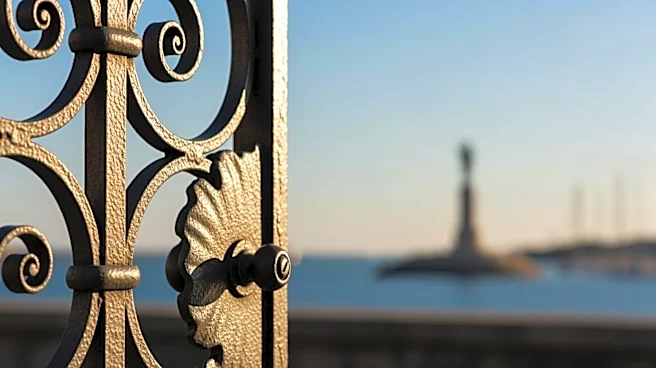
The U.S. Park Police have removed a portion of a seven-foot wire fence at Battery Park, New York, which had been obstructing views of the Statue of Liberty. The fence was initially installed in March for security reasons during shoreline construction.
This move comes after significant public outcry from tourists, locals, and civic leaders who argued that the fence unfairly restricted free views of the iconic landmark. The Park Police have now freed up about 150 feet of space at the eastern end of the park, allowing unobstructed views once again. Despite this concession, the fence remains in place in the primary security area, with the Park Police citing ongoing security concerns. An officer is now stationed in the area where the fence was removed to maintain security.
Why It's Important?
The decision to remove part of the fence is significant as it addresses public concerns about accessibility and fairness in accessing national landmarks. The Statue of Liberty is a symbol of freedom and democracy, and the ability to view it freely is important to both locals and tourists. The move also highlights the balance between security measures and public access to cultural and historical sites. By partially dismantling the fence, the U.S. Park Police have shown a willingness to compromise, which could set a precedent for how similar situations are handled in the future. This decision may also impact tourism, as unobstructed views of the Statue of Liberty are a major draw for visitors to New York City.
What's Next?
While the immediate issue of obstructed views has been partially resolved, ongoing discussions about security and public access are likely. The U.S. Park Police have indicated that the fence will remain in the primary security area, suggesting that further negotiations may be necessary to address public concerns fully. Civic leaders and local politicians may continue to advocate for more access, potentially proposing alternative security measures that do not impede views. The situation may also prompt broader discussions about how security is managed at other national landmarks, balancing safety with public enjoyment.