






What's Happening?
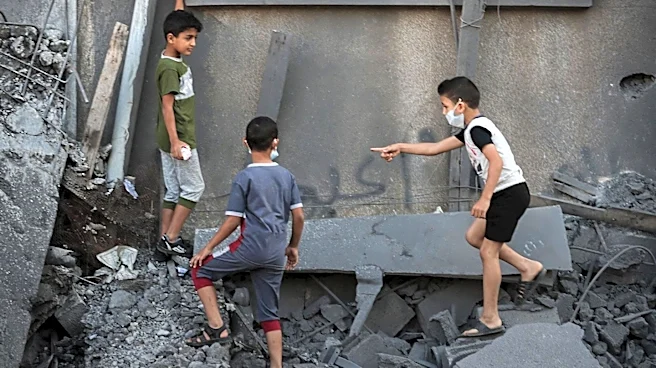
Children in Gaza with visual and hearing impairments are experiencing significant disruptions to their education and access to essential medical supplies due to the ongoing conflict and blockade. Educational institutions like the Atfaluna Society for
Deaf Children and the Al-Noor school for blind students have been damaged or forced to close, leading to a lack of specialized teaching and learning spaces. Fadel Kuraz, a sign language interpreter and disability rights advocate with Atfaluna, reports an unprecedented health and humanitarian setback, with an estimated 35,000 new individuals suffering total or partial hearing loss due to explosions, adding to the pre-October 2023 figure of 20,000. There are critical shortages of hearing aids, batteries, ear molds, spare parts, and visual learning materials like Braille, exacerbated by electricity and communication outages. Families struggle to repair or replace vital equipment, such as prescription glasses for visually impaired children, due to the blockade and high costs. The limited availability of educational services, often reduced to a few hours a week, is causing significant academic decline and fear of illiteracy among these vulnerable children.
Why It's Important?
The severe impact on disabled children in Gaza highlights a critical humanitarian crisis with long-term societal implications. The destruction of specialized educational infrastructure and the lack of essential medical supplies are not only depriving these children of their fundamental rights to education and health but also creating a generation at risk of illiteracy and further marginalization. The inability to access hearing aids, glasses, and specialized learning tools means that children with disabilities are losing previously acquired skills and facing increased danger in their daily lives, as they cannot perceive warnings or navigate their surroundings safely. This situation places an immense burden on families, who are often left without support from institutions. The international community's failure to ensure the entry of humanitarian aid, including medical and educational supplies for disabled individuals, raises serious ethical questions about the protection of vulnerable populations in conflict zones and the potential for a lost generation of disabled children in Gaza.
What's Next?
Immediate intervention is urgently required to address the humanitarian crisis facing disabled children in Gaza. This includes breaking the blockade to allow the entry of essential medical supplies such as hearing aids, batteries, ear molds, and spare parts, as well as visual learning materials like Braille. Establishing safe, temporary alternative educational spaces is crucial to replace destroyed centers and provide consistent, specialized instruction. International organizations and humanitarian agencies will need to advocate for unimpeded access for these critical resources and support the rebuilding of damaged infrastructure. Efforts must also focus on providing psychological support for children experiencing high levels of fear, stress, and trauma due to the conflict. Without sustained international engagement and a concerted effort to address these needs, the long-term consequences for Gaza's disabled children, including potential illiteracy and further health deterioration, will be severe.
Beyond the Headlines
The plight of disabled children in Gaza underscores the disproportionate impact of conflict on vulnerable populations and the ethical imperative for their protection. Beyond the immediate humanitarian needs, the destruction of specialized educational and medical infrastructure represents a profound setback for disability rights and inclusion in the region. The long-term implications include a potential increase in the number of individuals with disabilities due to conflict-related injuries, coupled with a severely diminished capacity to support them. This situation could lead to a generation facing profound challenges in achieving independence and participating fully in society. The lack of access to basic necessities and specialized care also highlights the broader issue of human dignity and the international community's responsibility to ensure that the rights of all individuals, especially children with disabilities, are upheld even in the most challenging circumstances. The crisis calls for a re-evaluation of humanitarian aid frameworks to prioritize the specific needs of disabled populations in conflict zones.