









What's Happening?
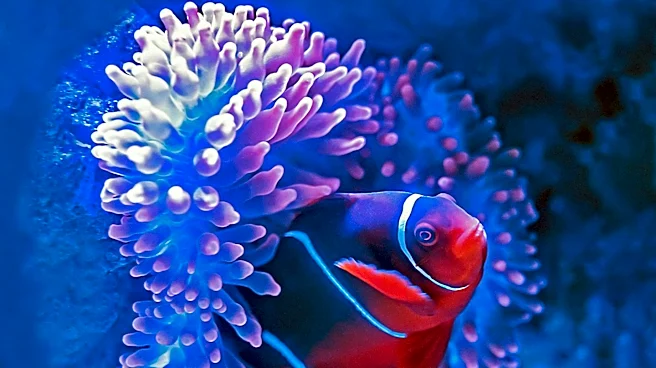
Researchers have discovered a novel antiviral defense mechanism in sea anemones, suggesting that animal immune systems may have evolved more diversely than previously thought. The study, led by scientists from the Hebrew University of Jerusalem and the University of North
Carolina at Charlotte, found that sea anemones use a protein called CARDIB, which suppresses rather than activates antiviral defenses. This finding challenges the long-held belief that animals inherited a single core antiviral system from a common ancestor. The research highlights that different animal groups may have independently developed distinct molecular systems for virus detection and prevention.
Why It's Important?
This discovery has significant implications for understanding the evolution of immune systems across the animal kingdom. It suggests that evolution has produced multiple successful strategies for fighting viruses, rather than a single universal approach. This insight could lead to new perspectives in virology and immunology, potentially informing the development of novel antiviral therapies. The study also emphasizes the importance of studying a diverse range of organisms to uncover evolutionary innovations that might be overlooked when focusing solely on traditional laboratory animals.
Beyond the Headlines
The research underscores the complexity and adaptability of evolutionary processes, revealing that ancient organisms like sea anemones can offer valuable insights into the early evolution of immunity. By exploring the diversity of life, scientists can uncover unexpected solutions to biological challenges, which may have applications in modern medicine and biotechnology. This study highlights the potential for ancient species to inform contemporary scientific understanding and innovation.