






What's Happening?
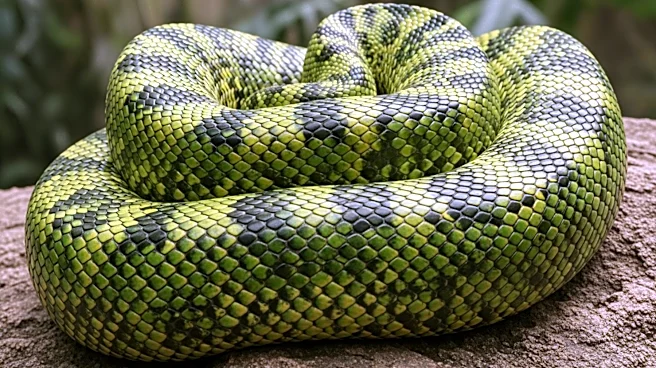
A recent study led by the University of Cambridge has uncovered that anacondas have maintained a consistent size for over 12 million years, despite the warmer climates of the Miocene period, which typically led to gigantism in other species. The research,
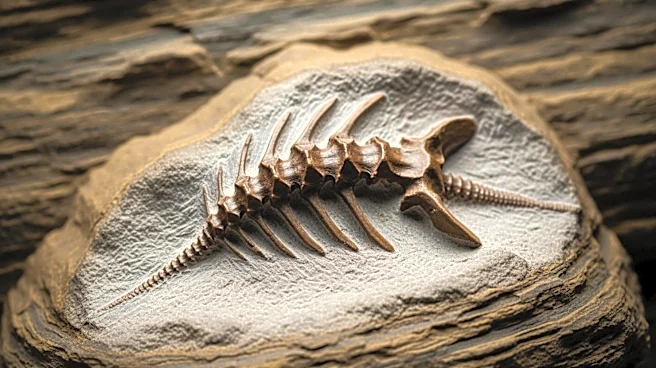
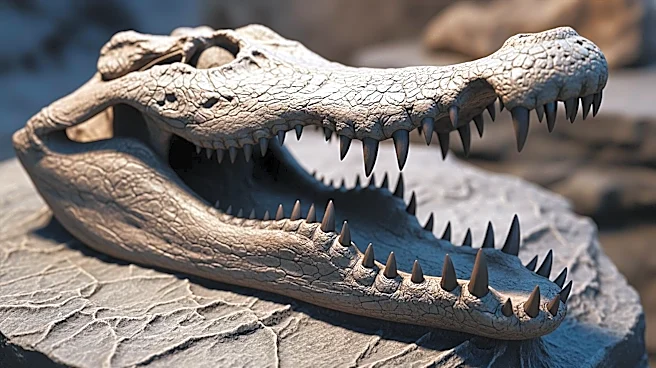
published in the Journal of Vertebrate Paleontology, involved examining 183 fossilized vertebrae from ancient anacondas found in Venezuela. These findings revealed that ancient anacondas measured around four to five meters, similar to their modern counterparts. This challenges the common paleontological belief that warmer climates result in larger reptiles. The study highlights that while many large species from the Miocene era, such as giant crocodiles and turtles, went extinct due to changing climates, anacondas persisted with little change in size.
Why It's Important?
The study's findings are significant as they challenge existing theories in paleontology regarding the relationship between climate and reptile size. The persistence of anacondas in maintaining their size despite environmental changes suggests a unique evolutionary adaptation that allowed them to survive while other large species did not. This research provides insights into the resilience of certain species and their ability to adapt to long-term climate changes. Understanding these evolutionary patterns can inform current conservation efforts and strategies for preserving biodiversity in the face of ongoing climate change.