


What's Happening?
A federal grand jury has indicted West Virginia Auditor Mark Hunt, along with four associates, on multiple charges including theft of property by a public official and bank fraud. According to U.S. Attorney Moore Capito, Hunt is accused of improperly
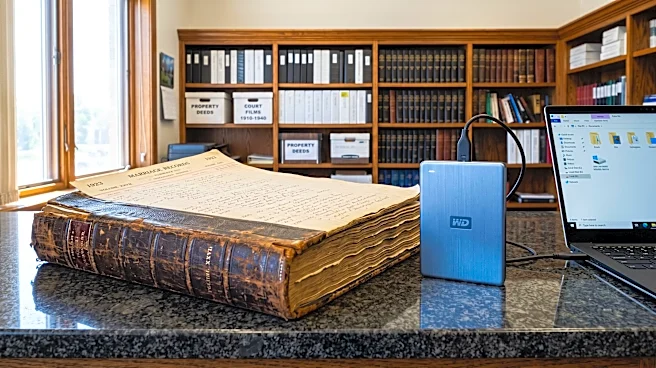
issuing nine tax deeds for properties in Kanawha and Boone counties to benefit a long-time friend and business associate, Robert L. Johns. Career employees in the Auditor's Office had previously deemed these properties ineligible for deed issuance due to Johns' failure to meet payment and paperwork deadlines. Despite these objections, Hunt allegedly signed and issued the deeds. The indictment also includes charges of bank fraud against Hunt, his Deputy Chief of Staff David Cole, and employee Marie Ann Hoffmann. Hoffmann is accused of submitting falsified government timecards, receiving state wages for work performed at Hunt's private law firm, with Hunt and Cole allegedly aiding and abetting this scheme. Cole and Frederic Scott Caudill, General Counsel for the Auditor's Office, also face charges of making false statements to federal investigators regarding the disputed deeds.
Why It's Important?
This indictment is significant as it involves a high-ranking elected official in West Virginia, raising serious questions about public trust and the integrity of state institutions. The alleged misuse of official power to facilitate property theft and commit bank fraud could erode public confidence in government accountability. The charges highlight potential vulnerabilities within state administrative processes, particularly concerning the issuance of tax deeds and the oversight of employee timekeeping. If proven, the case could lead to substantial legal penalties for the individuals involved, including lengthy prison sentences and significant fines. Furthermore, the involvement of multiple state employees suggests a broader pattern of misconduct, which could prompt further investigations into the Auditor's Office and potentially lead to calls for stricter ethical guidelines and oversight mechanisms for public officials in West Virginia.
What's Next?
Following the indictment, West Virginia Auditor Mark Hunt and his co-defendants are expected to make initial appearances in federal court for arraignment. Hunt has publicly stated his innocence and vowed to vigorously defend himself against the charges, indicating no immediate plans to resign from his position. However, prominent political figures, including House Speaker Roger Hanshaw and West Virginia Republican Party Chairman Josh Holstein, have called for Hunt's immediate resignation, citing the serious allegations and the need to restore integrity to the Auditor's Office. If Hunt does not resign, the House of Delegates may consider taking action in January. The FBI and the West Virginia Commission on Special Investigations conducted the investigation, and Assistant U.S. Attorneys Jonathan T. Storage and Joshua Hanks are prosecuting the case. The legal proceedings will determine the guilt or innocence of the defendants, and the outcome could have lasting implications for political leadership and public service standards in West Virginia.
Beyond the Headlines
The case against West Virginia Auditor Mark Hunt extends beyond the immediate legal implications, touching upon deeper issues of ethical conduct in public office and the potential for conflicts of interest. Hunt, an attorney, continued to practice law while serving as State Auditor, a practice that is now under scrutiny due to the alleged bank fraud scheme involving his private law office. This raises questions about the appropriateness of elected officials maintaining private business interests that could intersect with their public duties. The alleged disregard for established legal procedures in issuing tax deeds, despite objections from career employees, also highlights a potential culture where political influence may override professional expertise and legal compliance. This situation could prompt a broader re-evaluation of ethics laws and conflict-of-interest policies for public servants in West Virginia, aiming to prevent similar alleged abuses of power and reinforce the principle that public office is for service, not personal gain.