


What's Happening?
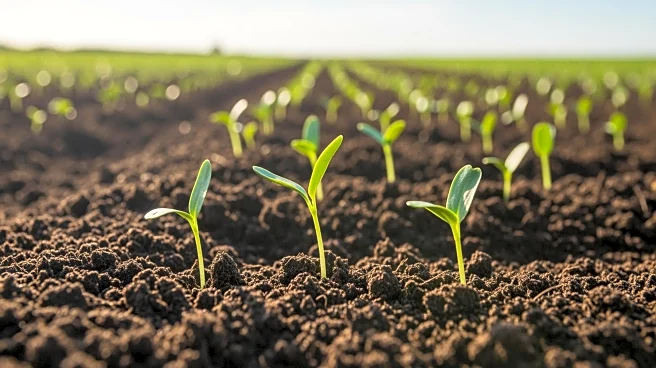
The Ministry of Agriculture in Liberia has introduced a new five-year Corporate Strategic Plan aimed at enhancing the country's agricultural sector. This plan, covering the years 2025 to 2030, is funded by the International Fund for Agricultural Development
(IFAD) and focuses on implementation, accountability, and measurable results. The strategy is designed to reduce food imports and strengthen domestic agricultural production, aligning with President Joseph Nyuma Boakai's vision for self-sufficiency in food. Agriculture Minister Dr. J. Alexander Nuetah emphasized the importance of transforming agriculture management and delivery across Liberia, highlighting the country's potential due to its vast arable land and favorable climate. The plan prioritizes increasing domestic food production, expanding mechanization, and empowering youth and women, among other goals.
Why It's Important?
This strategic plan is crucial for Liberia as it seeks to address longstanding challenges in its agricultural sector, such as weak coordination and limited execution focus. By enhancing domestic food production and reducing reliance on imports, the plan aims to bolster the country's economic resilience and food security. The involvement of international partners like IFAD underscores the global support for Liberia's agricultural development. Successful implementation could lead to significant economic benefits, including job creation and improved livelihoods for rural communities. The plan's focus on climate resilience and institutional reform is also vital for sustainable growth in the face of environmental challenges.
What's Next?
The Ministry of Agriculture plans to guide the implementation of the Strategic Plan through performance tracking, public reporting, and transparency measures. This approach aims to ensure accountability and effective delivery of results. Development partners, including the FAO and the EU, have pledged their support for the plan's implementation, emphasizing the need for coordination and sustained investment. As the plan progresses, it will be essential to monitor its impact on smallholder farmers and the broader agri-food system, particularly in terms of productivity and access to finance.