






What's Happening?
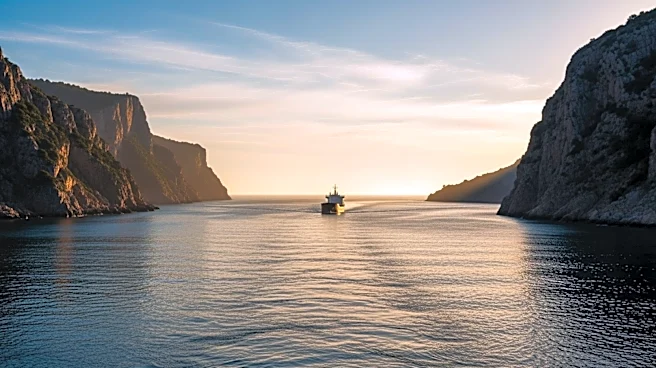
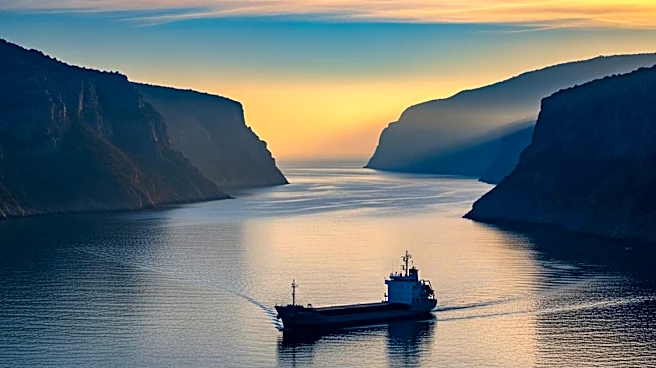
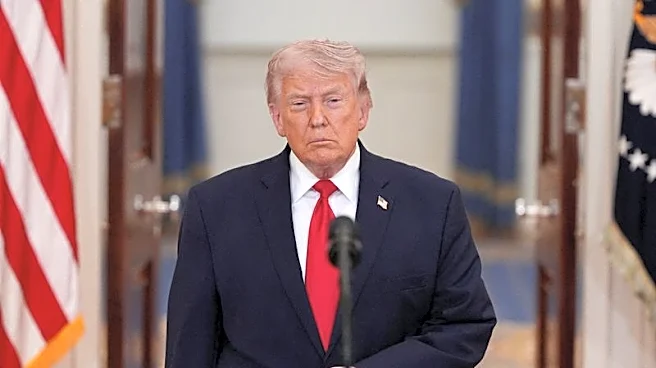
Iran and President Trump have both confirmed that the Strait of Hormuz remains open, following recent tensions in the region. President Trump stated that Iran is very close to reaching a deal with the United States, having agreed to nearly all the terms
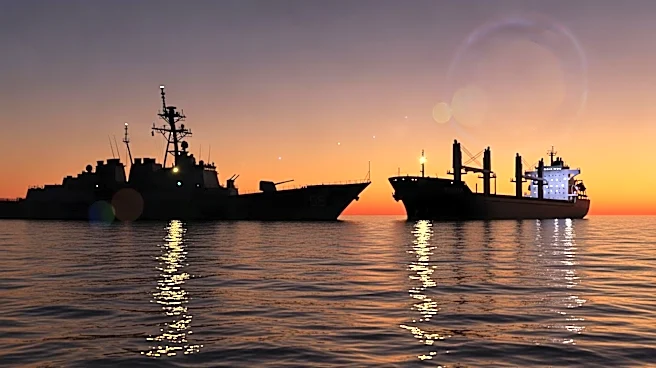
proposed by the U.S. since the onset of the conflict. This development comes as a significant diplomatic breakthrough, potentially easing tensions in a critical maritime corridor that is vital for global oil transportation. The Strait of Hormuz is a strategic chokepoint, and its closure could have severe implications for global oil markets.
Why It's Important?
The Strait of Hormuz is one of the world's most important oil transit chokepoints, with a significant portion of the world's petroleum passing through it. Ensuring its openness is crucial for maintaining stability in global oil prices and supply. The confirmation from both Iran and President Trump suggests a de-escalation of military tensions, which could lead to improved diplomatic relations and economic stability. This development is particularly important for the U.S. and its allies, who rely on the free flow of oil through the strait to meet their energy needs.
What's Next?
With negotiations reportedly nearing completion, the focus will likely shift to finalizing the terms of the agreement between the U.S. and Iran. This could involve further diplomatic engagements and potential easing of sanctions on Iran, depending on the specifics of the deal. The international community will be closely monitoring the situation, as any changes in the status of the Strait of Hormuz could have far-reaching implications for global energy markets and geopolitical stability.